
Sunday, April 20, 2014
The strange organism that is English cricket.
English cricket is a strange organism. Administrators, players, media all break asunder and then reform into a mutual back-slapping society again. Writers who condemned players suddenly find they are their best friends again. Coaches who were sacked for failure become "special advisors" to the people who replaced them. Men who cataclysmically failed as Captains re-emerge spouting platitudes about "people feeling comfortable enough to express themselves the way they want." Administrators blame their best player and abandon him as a scapegoat. And really good cricket writers don't even mention the KP "Elephant in the room" presumably because they are forbidden from doing do. And so we bollock on, hiding our manifest failings, rewarding failure with sinecures and hoping that something will come up.


Monday, March 31, 2014
Time for change at the top in England cricket

Sometimes its not the big disasters which do for leaders in sport but the accumulation of incompetences. True André Villas-Boas left Tottenham after a 0-5 drubbing at the hands of Liverpool but this was the “final straw” which followed a series of lacklustre results – the 0-3 home loss to West Ham perhaps being the nadir. So it is with England cricket. The Ashes was a disaster, and it mattered. The leaders of England cricket then got into a recriminating frenzy aimed not at themselves or the other guilty parties such as Captain Cook and Coach Flower but bizarrely at Kevin Pietersen. Through leak, innuendo and off-the-record briefing they pointed the finger at the easy target of someone who had “previous” and who was perhaps not blameless in Australia but who performed as well as any other England player on that disastrous tour (not saying a lot I know, but it says something). And whatever else KP might have done he did not quit the tour half way through!
Since Pietersen last played for his country in the Sydney Test match England has now played 18 matches in the two limited overs formats. The record is 13 losses and 5 wins. The losses include against Australia, the West Indies, New Zealand, South Africa and now, humiliatingly, The Netherlands. This rather suggests that KP’s departure from the team has made things worse not better! At the end of the match against the Dutch Jonathan Agnew put it clearly:
"What a shambolic end to a shambolic performance to end a shambolic winter.There really are some questions to be answered here. Realistically, can they give the job to Ashley Giles now?"
Giles himself said this:
“It's disappointing and embarrassing There has to be a certain amount of complacency…there can be nothing else for it…all we can do is apologise and to the people watching at home.”
If the team was complacent then it is Giles who must take the can. It’s unlucky if, like Tim Sherwood at Spurs, you're the wrong man in the wrong job at the wrong time. Neither man has really cut his teeth at the highest level and each was pitched into a job ill-prepared for it.
Something is profoundly rotten in the realm of England cricket (it is at Tottenham as well – but that's another story!). The England management style from the top is full of control-freakery which constricts rather than liberates coaches and players. The cynical making of Kevin Pietersen the scapegoat for The Ashes disaster was wrong in every way – not least because it distracted England from the job in hand. Which was to try and recover some form and some dignity.
The England “plan” followed over the past few years has been to throw money at the problem. The best paid cricketers in the world (IPL aside). A team of support staff which outnumbered the playing squad. The men who oversaw this project were ECB Chairman Giles Clarke and CEO David Collier – both covered with Teflon and still in their jobs!
We lost “The Ashes” because an ill-chosen, badly coached, incompetently-captained and rather arrogant and unpleasant team were outfought, out thought and (yes) out-sledged by Australia - and they have been unable to recover since. Giles Clarke and David Collier bear the ultimate responsibility for England's shambolic and continuing fall from grace. Once Clarke had sacked Andy Flower (not unreasonably) he then ducked the obvious next step which was to sack Alastair Cook as well. Instead he chose to say that Cook, clearly part of the problem, will lead the recovery! And to suggest that Cook's failure was in some way attributable not to his own self-evident inadequacies as a Captain but to Kevin Pietersen is characteristic Clarke mendacity. Pietersen is generally liked by the younger fans who cricket needs for the future, but he is disliked by Clarke's generation - especially those with red and yellow ties who sit in the power seats of English cricket. So he was dispensable.
England in the Caribbean and Bangladesh have been awful – the odd highlight like Hales’ batting aside. It is a different squad to the Test squad but has the same brittleness and, as Ashley Giles admits, the same complacently. So what is the solution? I wish I knew. But I do know this if this was an enterprise anywhere else than England cricket the men at the top would fall on their swords. It needs new brooms in the top jobs – people who are prepared to take on the complacency and unsuitability of our antiquated domestic cricket system. Men who are prepared to stand up and be counted and not hide behind PR Speak and not require their players to do so. Change has long been overdue. Lets have it. Now!
Tuesday, March 25, 2014
Getting cricket into the little boy's the soul

The little boy, holding tightly onto his mother’s hand, was on his first trip to London. A few weeks earlier as a family they had gathered around their new television with its tiny screen to watch the Coronation. Now he was to be allowed to see the sights for himself. Buckingham Palace. Westminster Abbey. And then, if he was very good, Lord’s Cricket Ground. The first Test Match against the Australians had been in Nottingham just after the big Royal event and that was the first time the little boy had seen a live transmission of a cricket match. His mother wouldn’t miss it because her hero was playing - the dashing Denis Compton. She had cried when he was out for a "duck" to that fearsome Mr Lindwall. "It’s not fair she cried, poor Denis". And two weeks later it was Lord’s and now Denis would surely get his revenge. But that was tomorrow and now they would go to the ground and maybe get a glimpse of the players?
The boy’s father had said that Mr Brown might be playing and that the boy
must be sure to say hello if he saw him because Mr Brown had been at school with
his Uncle Geoff. The sun was shining as they emerged from the Tube and headed
down the Wellington Road and round the corner to where the famous Grace Gates
stood. There was rather a stern looking man standing outside the gates but the
boy’s mother wasn’t to be put off. "Hello Sir", she said, "Could you tell me if
Mr Compton is here?" "Well I should hope so Madam as he’s playing tomorrow and
even Mr Compton takes a net sometimes. Well speak of the devil here he is now!"
The boy’s mother jumped with excitement because there heading towards the Gates
with a rather hobbling step was the great man himself. "Oh Mr Compton will you
say hello to my boy?" "Hello young man and how old are you?" "Six sir" "And do
you like cricket?" "Oh YES sir, very much indeed. Please sir would you sign my
autograph book?". "I’ll do better than that - if you give me the book I think I
can get the whole team for you".
The boy’s mother was in a slight swoon – she said later she was sure that
she could smell her Denis’s Brylcream he was that close. The gateman turned to
her "Well he was in a good mood Madam. If you go inside you can sit on that
bench and wait for him to return". And then there he was again and with him was
a tall man in cricket whites but with a funny white silk scarf around his neck.
"Hello Youngster, here’s your book and this is Mr Brown" "Gosh!" said the boy
"My Dad says you knew my Uncle Geoff at school". Freddie Brown smiled and looked
at the boy’s name on the book cover. "I should say so. Good man - couldn’t play
cricket though!"
And that is how cricket got into the little boy’s soul.
Friday, March 21, 2014
Remembering one of the glory days from the 1970s, and this was one Kent didn't win !

They were the Glory days of course - the 1970s. Has a team so dominated a decade in any sport as that great Kent team? There was the memorable County Championship win in 1970 - to be followed by two more in 1977 and 1978. There were Gillette or B&H wins in Lord's Finals in 1973, 1974, 1976 and 1978. And Sunday League wins in 1972, 1973 and 1976. That's ten trophies in nine years! But my memory is of a glorious failure not of one of these successes. In 1971 Kent reached their second Gillette Cup Final ( they had won the competition in 1967 - the first bit of silverware for 54 years!). Kent had beaten Northants (Cowdrey 98), Yorkshire (Shepherd 4-26), Leicester (Denness 85, Woolmer 4-37) and Warwickshire (Luckhurst 84) on the way to the final where they were to face Lancashire.
I was born in Orpington in West Kent in Cowdreyland. Colin went to the same church from his home in Bickley. I was never going to support any other County than Kent. But my Dad was a Lancastrian who as a schoolboy and young man had been a regular at Old Trafford in the inter-war years. Lancashire were the holders of the Gillette Cup and had a formidable side in what was still the early days of limited overs cricket. Almost every player in that Lancs side was a star. "Bumble" Lloyd and his maestro namesake Clive. Harry Pilling, knee-high to a grasshopper but gritty and determined. Farouk Engineer - wicketkeeper and explosive batsman. "Jolly Jack"Simmons who bowled flat and miserly and a top class pace attack in Lever and Shuttleworth. They were led by the shrewd Jackie Bond - worth a place in the side for his captaincy alone.
My Dad hadn't seen much of his beloved Lancashire for years so a Lord's final would be special. My membership of Kent allowed me to get tickets - hard to come by in those days of packed houses for every match, especially a Final. We sat together in the top of the Warner Stand, me discreetly wearing my Kent colours and Dad sporting a Red Rose.
Lancs won the toss and batted. There was an early wicket when John Dye bowled Wood for a duck. Though Pilling hit out a bit Bumble was slow and Asif Iqbal controlled, as of course was Deadly Derek Underwood. Between them Deadly and Asif bowled 24 overs for only 62 runs. Shep (1-38) was economical as well. Clive Lloyd hit 66 but it was only really a late assault from Jolly Jack and his spin partner David Hughes that gave Lancashire a respectable total of 224. My Dad looked gloomy. The Kent batting line up was strong even though Cowdrey was missing from it. Luckhurst, Denness (the new captain), Asif, Knott, Shepherd, Woolmer, Julien...Formidable.
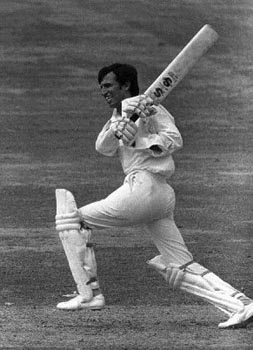 So Kent needed 225 at 3.75 an over. It didn't look too difficult a task. But early wickets fell and when Kent were 68-4 it looked a tough ask. Asif and Knott restored things but a crazy run out saw the back of Knotty 105-5. At which point Asif upped a gear and played with the freedom that on his day made him one of the best in the world. When he was 89* it looked that he would carry Kent home but then Bond took one of the catches of all time. Simmons bowled a bit wide. Asif's eyes lit up and he played an expansive lofted cover drive. Bond leapt in the air and took it one-handed to his right. My Dad, quite a taciturn man usually, leapt to his feet "I think we'll win now". He was right. Kent folded in fourteen balls and Lancs won by 24 runs.
The sun shone throughout that glorious day. The cricket was at times sublime. The tension was palpable. The crowd was engaged - and my Dad had a story to tell, and didn't he love telling it! Kent were to have many an equally happy day over the rest of the1970s so I can't complain. Anyway "I was there" - and as the years pass that memory will never fade.
Friday, March 14, 2014
Macavity’s not there
CRICKET SOCIETY NEWS BULLETIN
APRIL 2014 (No. 555)
NOTES FROM THE EDITOR (John Symons)
Can We Have Our Ball Back Please Mister?
(and while we’re about it - what about our game as well?)
So, the England football team which set off for the World Cup with high hopes has returned, having lost 2-0 to Chad; 3-0 to Mongolia and 5-0 to Tuvalu. The captain has been wheeled out to Press Conferences but none of the Manager, Assistant Manager, Fitness Coach or Chairman of the FA has felt it necessary to say anything in public. The kit manager has made a sheepish appearance to say not very much but that’s all. Oh — and the Manager has apparently resigned but isn’t prepared to talk about it and Wayne Rooney has been dropped forever for unspecified reasons. Far-fetched? Yes, for football but does it ring a bell in terms of cricket?
Cricket has ever been the worst administered sport in the world but now seems to display a real contempt for the paying spectator. The public doesn’t care about ‘dirty washing’ but does want to ensure that when they fork out their ever-increasing sums of money to watch a Test team in action, they understand what is going on and why. An informed spectator-base is one that will go along with decisions, even if they seem bizarre, in the knowledge that those who run the game are being straight with us.
Andy Flower, whose attitude to interviews seems to have been one of indignant surprise that anyone should dare to ask him questions, has gone but is going to have something rather nice lined up for him in the background. There’s going to be a new Head Coach — note, not Team Manager and doubtless, the usual suspects are being lined up. But it’s not about individual coaches and their work, it’s more a feeling that there is a real ‘closed shop’ operating at ECB level. Steve Harmison put his name forward when the post of an England Selector fell vacant. He didn’t mind not getting the job — Angus Fraser is a hard act to beat and looks a really good choice; what was insulting was that the only acknowledgement that Steve received was an automated Email noting his application — nothing else. The England overall supremo Hugh Morris, of whom it might be felt as Kitty Muggeridge waspishly said of David Frost, ‘He rose without trace,’ has trotted off to Glamorgan without a farewell comment. He was succeeded by Paul Downton, presumably with attendant white smoke, after years out of cricket but with lots of tips as a stockbroker. Geoff Miller stood down as Chairman of Selectors, also in mute fashion and was replaced by James Whitaker. Now that seemed a quite sensible progression until his now infamous interview. Normally affable and sensible, he looked like a startled rabbit in the headlights when asked only slightly difficult questions and if Sebastian Faulks is looking for fresh material in his revamping of P. G. Wodehouse, he need look no further than that performance, playing regularly on YouTube. It might explain why, one supposes, that no one from the England camp, except the players, ever comes out to talk any more. And the great panjandrum Giles Clarke? Like all the others — Macavity’s not there.
I really wanted to write something positive this month as Spring looms on the horizon and an old man’s thoughts turn to the cricket field but I feel, like so many others, adrift at a distance from the game. County members watch in dismay as another hotel rises and they still sit in stands without roofs. A regular correspondent from Durham was prescient when he predicted that Ben Stokes would be a success but he also saw that when it happened, no one at Durham would be able to watch him play in the future. Foreign mercenaries fly in and out with no real contact with supporters and decent players who have come through the ranks are being dispensed with, as clubs find it more profitable to feature younger players who are subsidised from the ECB. Men who might have matured and become even better are on the scrap heap at 28. I wish I could find reasons to be cheerful but at the moment, it’s difficult.
As E M Forster never wrote — Only Disconnect — that seems to be the motto of the modern English game.
John Symons.
(Please note: the views expressed in the Cricket Society News Bulletin Editorials and Notes are those of the author and not of the Cricket Society as a whole.)
Sunday, March 02, 2014
The charade of England advertising and interviewing for the "HeadCoach" job. It's a done deal.

Ashley Giles knows he's got the England "Head Coach" job as does every reasonably close observer of the England scene. The ECB is going through the charade of advertising the post and interviewing candidates for reasons best known to itself. But don't be fooled. The decision to appoint Giles was taken before Flower was pushed out. The job was downgraded to "Head Coach" in part to give Flower a sinecure in the set-up as a sweetener when he was forced to quit the "Team Director" job.
Giles coaching experience is limited and he would not be on any other nation's short list. Even Bangladesh! We will now have novices in the two jobs closest to the team - Ashley Giles and his boss Paul Downton. Difficult to see either of them standing up to Giles Clarke who has tightened his grip further by having two men totally beholden to him in these roles.
Saturday, March 01, 2014
TMS Podcast shows the cricket establishment closing ranks on the KP affair

The discussion on Test Match Special between Graeme Swann, Stephen Brenkley (Independent) and John Etheridge (The Sun) chaired by TMS's Simon Mann is now available as a podcast here:
http://www.bbc.co.uk/podcasts/series/tms
It is an interesting chat touching on England's Ashes debacle and looking forward to the period ahead when, as we know, three recently centrally contracted players will not be available. Trott, through illness, Swann who has retired and of course Kevin Pietersen who was summarily sacked after Australia.
The establishment is visibly closing ranks on the KP affair and this applies to all three of the participants in the podcast. First the myth that Andy Flower resigned of his own accord was maintained by them. They all like Flower and are clearly party to the official line that he, Andy, walked away. Well did he walk, three weeks after saying he wouldn't, or was he pushed? Draw your own conclusions but for me once what Etheridge referred to as "People very high up in the ECB" had decided on KP they decided on Andy Flower as well. This, of course, means ECB Chairman Giles Clarke the "high up" who takes all the key decisions. That they let Andy down gently is admirable given his service and success. But they knew he had to go - so he went.
As far as KP is concerned all three of the participants frankly did not have a kind word to say about him - bar acknowledging the obvious that he is a great cricketer. Even this was watered down by a suggestion that he is "in decline" - not a view that all fans would agree with! Swann said that he and KP were not friends. The journalists indulged in a big of mostly non-specific gossip about how difficult KP can be. All rejected the idea that management was at fault. But the reality of course is that KP can be managed. Michael Vaughan did it. Duncan Fletcher did it and for a time Andrew Strauss and Andy a Flower did it. Do you recall any "issues" during the triumphant 2010/11 Ashes tour when Kevin scored a decent 360 runs at an average of 60? Me neither.
Graeme Swann repeated what he has said previously that there were no particular problems with KP whilst he was still with the recent tour . When Swann went home after the third Test that, implicitly, was when the problems began and the team "fell apart". What were they? Well on the face of what we heard it was about a bit of boorishness by Pietersen on a few occasions. Well we all deal with stress in different ways - maybe KP whistles and is silly. But that is hardly a hanging offence!
Andy Flower left in no small measure because he cataclysmically failed to manage the England team on tour. During that tour two players walked away. One batsman (Cook) fell from being one of the world's best to not being worth his place and the rest mostly batted cluelessly. The bowling wasn’t much better and England failed to finish off Australia all too often. Through it all Kevin Pietersen played as well as anyone, which isn't saying much but he did finish as England's top scoring batsman. And he is the scapegoat!
In the weeks to come we will see England try and recover some dignity as a cricketing force in the Caribbean and then in Bangladesh in the World T20. Whatever happens Ashley Giles will be appointed Head Coach and then in the summer he and Alastair Cook will try and restore some pride in English cricket. It's a tough ask. And they will do it without the one man who can turn a game on its head with the bat. Because the establishment has chosen to do so. The Aussies, laughing themselves into frenzy though they no doubt are, must think we are mad. Perhaps we are!
Wednesday, February 19, 2014
Can England change its domestic cricket to reflect the new world? Lets start with T20
In my study I have a complete run of Wisden dating back to the first published in 1864. Those prior to the Second World War are all facsimiles from the brilliant Willows Publishing so please don't assume that my “collection” suggests millionaire status! But the run is a wonderful thing for a cricket lover, especially a writer, to have and I wouldn't be without it. The majority of the pages of these 150 volumes cover the English County Championship from its early days in the mid 1890s through to today.
In my childhood the County Championship still mattered and when Kent won it for the first time for 57 years in 1970 it was one of the more exciting moments in my sporting life – and it still is. By then of course “Limited Overs” cricket was well established. The Gillette Cup had arrived in 1963 and it
“…fired the imagination of the public to such an extent that Lord’s was full to overflowing for the Final on a sombre September day when rosettes and banners gave the game a new dimension…”
as Gordon Ross put it at the time in “Playfair” (that other essential cricket Annual). In that season the matches were 65 Overs per side so there was good value in store for the fans with 130 completed overs in prospect in a full day. The Limited Overs goose was to continue to lay golden eggs for some time and inevitably the Gillette was joined in 1969 by the “Sunday League” a 40 Overs per side competition which did not start until after Morning Worship had been completed. Cricket purists were not over-welcoming of this 80 Overs per day event. Gordon Ross was less than enthusiastic and quoted theatrical impresario C.B. Cochrane in the 1970 “Playfair” annual:
“You give the public not what you think they ought to have, but what they want”
Increasingly what the public wanted was limited overs cricket and when the “Benson and Hedges” (“B&H”) Cup (55 Overs) arrived in 1972 it was clear that this was the future of the domestic game – not least because compared with the County Championship that is where the money was.
So three limited overs competitions became established alongside the County Championship which struggled on as as a sort of purists’ eccentricity watched only by aging fans many of whom regarded the one day game with contempt – not least when coloured kit came in and it could be dismissed as “Pyjama cricket”. But the golden goose started to stutter a bit and the golden eggs became even less frequent so that by the new Millennium, and with the B&H finishing, something new was again perceived to be necessary. In the 2003 Wisden the Editor described the imminent arrival of Twenty20 like this
“The new knockabout Twenty20 Cup is a valid experiment in itself, which shows cricket noticing at last that some of its followers have other commitments”
Well, as they say, the rest is history. We, the English, invented something and within a few years it was copied and enormously enhanced and improved by other countries. That may have happened before! “Enhanced and improved” – in this point of view means that the Indians (especially), the Australians (initially reluctantly), the South Africans and just about every other country where cricket is played launched commercially successful T20 tournaments. In ten years a lowish key English experiment has revolutionised world cricket – except, it has to be said, in England!
No country decided that their T20 tournaments should have 18 participating teams! None decided that matches should be played in country grounds without a big spectator catchment area and with inadequate facilities (often even no floodlights!). All knew that the number of teams (“franchises”) should be limited to say eight. That the matches should be played at night in big city grounds each of which had a huge catchment area. That they could not simply build on whatever moribund domestic team structure they had but start afresh.
Here in England in 2014 there will be 18 T20 teams again this year. And there will be fixtures at all of the tired old County grounds: Grace Road, Brighton, Taunton, Derby, Chelmsford, Northwood (Northwood??), Arundel (Arundel??) and the rest. That’s 126 matches spread over three months before we even get to the knockout stages. (That is not a misprint. 126 matches). What might once have been a golden goose has become a preposterous monster!
Part of the British way is eventually to get around to the idea that others might have perfected our institutions over time rather better than we have. It takes time though – time measured often in decades (or more) rather than a year or two. Keith Bradshaw when he sat on the ECB Board as representative of MCC worked with others to put together a sensible domestic T20 proposal. It involved eight or ten teams (“Franchises”) playing an IPL style tournament over a prescribed shorter period of time. It made total sense copying the successful model of the IPL and the Australian “Big Bash” (etc.). It went down like a lead balloon with the ECB not because it was ill-thought through, or commercially unwise (on the contrary) but because it moved away from the 18 County system.
English cricket is riddled with prejudice and rancid with nostalgia. We meander every year through the delusion that Four Day County cricket matches matter when across the whole season the moribund County Championship gets fewer spectators than the Football League Division Two gets in one day. The recent match between Chesterfield and Fleetwood was watched by 6,500 spectators. That would be close to a record crowd at Taunton ! And for T20 as well – it would be unthinkable for the County Championship. Note: I’m not comparing our County system with the top of the Football leagues (The Premier League) but with the bottom.
So what’s to do? Well Keith Bradshaw was on the right track and as a starter we should adopt that idea pronto for T20. I’ll address the longer form of the game in a later blog but suffice to say that the current 18 Team domestic structure is not right for the four day game any more than it is right for T20. But for now lets state the case for a proper, exciting, focused T20 tournament played at the biggest city grounds at a time that people can watch them. Oh and let us remind ourselves again of Cochrane’s maxim:
“You give the public not what you think they ought to have, but what they want”
That quote was in Playfair 44 years ago. Must be time to take note of it. Even in England !
Sunday, February 16, 2014
Teflon Man Giles Clarke defends the indefensible - as ever.

In an interview in the Sunday Times today ECB Chairman Giles Clarke says the following:
"What I’ve learnt in my time in cricket administration is that the important thing is to make the right decision, however much it is disapproved of. I learnt that with selling the TV rights to Sky in 2004. If you’re going to make a hard decision, don’t vacillate.
“I’m confident the public will still support us [despite the loss of the Ashes and Pietersen]. Sport is about regeneration and we have exciting young players in Jos Buttler, Eoin Morgan and Ben Stokes. They will empty the bars as much as anyone.
“We had not scored 400 in 13 Tests. People expect our batting unit to deliver and so do the selectors. We want the nation to be excited and proud of our team, as we are of our women’s team. We’ve got to wake up. Alastair Cook needs to stamp his authority and I’m sure he will.”
The Clarke tactics, as ever, are to divert attention from his own failings. The KP affair was a minor sideshow which the venal Mr Clarke chose to make centre stage. England did not lose "The Ashes" because of Kevin Pietersen - we all know that. We lost because an ill-chosen, badly coached, incompetently-captained and rather arrogant and unpleasant team were outfought, out thought and (yes) out-sledged by Australia. Giles Clarke bears the ultimate responsibility for England's shambolic fall from grace. Once Clarke had sacked Andy Flower (not unreasonably) he then ducked the obvious next step which was to sack Alastair Cook as well. Instead he chose to say that Cook, clearly part of the problem, will lead the recovery! And to suggest that Cook's failure was in some way attributable not to his own self-evident inadequacies as a Captain but to Kevin Pietersen is characteristic Clarke mendacity. Pietersen is generally liked by the younger fans who cricket needs for the future, but he is disliked by Clarke's generation - especially those with red and yellow ties who sit in the power seats of English cricket. So he was dispensable.
Clarke is Teflon man - he should not have survived the disgraceful Stanford affair nor the removal of live cricket from free-to-air cricket about which he now boasts. His position is shorn up by the 18 counties who are totally reliant on ECB patronage. And yet he now has his grubby hands on the levers of power in world cricket. Barely believable.
Sunday, February 09, 2014
My response in the Telegraph Blog to Scyld Berry's piece on latest ECB explanation for Pietersen sacking.
Truly deplorable from the ECB. Evidence now firm, including the testimony of Graeme Swann, that KP's attitude was fine on tour. The 2012 Incidents were put behind everyone, Pietersen apologised and worked hard on his return. This is an outrageous settling of old scores by people who couldn't manage a paper round. Although I don't believe it some are saying that KP has been jettisoned to clear the way for Peter Moores to return as coach. I don't believe that because I'm sure Ashley Giles has got the job. But should the Moores rumours be true ECB's behaviour is even more squalid than it seems.
Giles Clarke takes all the key decisions at the ECB. Ironically he was the prime mover in getting Pietersen back into the team after his 2012 dreadful texting behaviour. It seems that Clarke has repaid KP's subsequent good behaviour by agreeing to his sacking. It is inconceivable that new men Whittaker and Downton were empowered to take this decision - it was certainly Clarke's. As always David Collier the generously remunerated CEO of the ECB has kept his head down. The invisible man. The ECB management is revealed to be as dysfunctional as they are incompetent. And at the bottom of the pile of stakeholders are the cricket-loving public who on top of having to pay the highest ticket prices in the world (by far) and having ZERO live cricket on free-to-air TV now after a cataclysmic Ashes tour see England's top batsman discarded for no good reason.
Sunday, February 02, 2014
Ashley Giles will be England's new cricket coach. Here's why.

The stories and speculation about the England coaching job are still rife on the sports pages. Gary Kirsten's name as the "ideal candidate" is in most of them. It won't happen. Here's why.
Andy Flower was sacked by the ECB management, principally by Giles Clarke the Chairman. But out of respect for him it was announced that he had "stood down" (three weeks after he said on the record that he wouldn't !). Clarke even said that the Ashes defeat was not the reason for Flower's departure. A blatant bit of mendacity. It was further said that England wanted a single coach across all formats. Flower wasn't available for this so he had to resign. This was window dressing. Whilst one coach might make good sense there was no rush - after all Ashley Giles has only been in the Limited Overs job a short time.
Ashley Giles will get the England coach job. The logic will partly be that he is already part of the set up as One Day coach so if is logical to extend his brief. That he has conspicuously failed so far won't be mentioned! Giles Clarke likes people around him who are beholden to him. That means people who are insiders in the cosy world of county cricket. Clarke's head honcho David Collier is one such - they've been Tweedledum and Tweedledee for years now. Clarke doesn't like challenge. I once saw the estimable Gideon Haigh tear him apart at a conference and Clarke responded like the selectively truthful street fighter he is. Gideon wasn't bothered, but we saw Clarke warts and all that day !.
Giles Clarke has decided that Ashley Giles is his man. Unthreatening, A county stalwart. An insider. Can be manipulated. Wouldn't say boo to a goose. Or a Clarke.
Friday, January 31, 2014
The brave new world of international cricket

For the past ten years or so the power in cricket has shifted to India and that will now be formalised. They have dominated the ICC for some time and always get their own way. India’s cricket has been corrupt and a fierce battle ground all too often in the past. But the wise approach in trying to understand any modern sport is to follow the money and that’s in India for cricket.
The success of the IPL is based on the novel notion that City teams, playing in big stadia at a time and for a duration that spectators and (crucially) TV watchers can schedule into their lives will work financially. (This is what we should set up in England for T20 as well – but that’s another story!). For International matches this is extended to One Day Internationals which have the huge commercial benefit of lasting longer – more airtime and more advertising spots to sell.
Test matches are problematic for the Indian money men. If something special is going on (Sachin’s retirement for example) then the punters will go to the grounds and the TV audiences will be there. But mostly Test matches are a distant third in the priority of the Indian cricket moguls.
The Indians will be here for five Test matches this summer. The receipts will be good but I doubt that they will be so good that India will say that a tour to England with Test matches is a priority for the future. They are trying to scale down their Test cricket (see the recent cancellation of the Newlands New Year’s Day Test for example). I would expect the next India tour here to be a maximum of three Test matches.
With the financial clout they have the BCCI will effectively control world cricket. The idea of a “Test Championship” has gone already and India will certainly only be prepared to play a Test series if the revenues make it worthwhile. That’s versus England and possibly Australia (but reduced in number) and not much else.
“The Ashes” will remain for the time being as its financial basis is strong and it is a bilateral arrangement in which India has no interest. Other countries tours to England and Australia are far more problematic and the return tours by these two countries more so. Limited Overs cricket will increasingly be the King and Test cricket will become a rarity – the odd heritage matches and series (The Ashes) aside. For the MCC to base their ambitious Ground redevelopment plans on Test cricket is highly questionable. There is no guarantee at all that there will be a Test match at Lord’s every year in future.
The decline of Test cricket is inevitable. Top players will play more and more limited overs matches at domestic (IPL, Big Bash etc.) and international level and their skills will be honed only in this context. Domestic First Class cricket will gradually fade away. The spectators will never return to it. The players won’t want to play it or the broadcasters to cover it. In England domestic cricket will be smaller, fewer teams (maybe eight franchises), players and matches. Expect the big games in say five years to be between the Birmingham Bruisers and the Headingley Tykes – Warwickshire and Yorkshire will be distant memories of how it once was.
In England we sewed the seed of Twenty Twenty cricket to try and keep the County game afloat. It will be its death – and it will take Test cricket with it.
Wednesday, January 22, 2014
John Shepherd - correcting Wisden !

The recently published “Wisden Cricketers of the Year – A celebration of cricket’s greatest players” is a nice coffee table book full of good photographs and brief biographies of all of these Wisden Cricketers since the first in 1889.
I would like briefly to comment on author Simon Wilde’s description of John Shepherd who was one of the five in 1979. He says that Shep “... would have played many more Tests had he not joined a multinational tour of South Africa in 1973, leading to his excommunication from West Indian cricket”. In fact had Mr Wilde looked at my biography of Shep he would have seen that in 1971, some two years before he went to South Africa with the Derrick Robins XI, John had been told that the powers-that-be in West Indies cricket had decided that he would not play for the Windies again. To this day John does not know why this was but it had nothing to do with his later involvement in Southern Africa. It is also quite untrue to say that Shep was “excommunicated” by West Indies cricket. What John did was not in any way prohibited by the West Indian authorities at the time – it was not until May 1976 that West Indians were warned not to play in South Africa or they would be banned from playing in the Caribbean. John had no involvement in Southern Africa after the 1976/6 season.
Whilst I was researching the John Shepherd biography in Barbados all of the former players, officials and commentators I met had nothing but praise for Shep – and his career is marked in a nice display in the “Cricket Legends of Barbados” museum in Bridgetown. Simon Wilde hints that Shep was a rebel and that he ruffled some feathers. He wasn't and he didn't!
Tuesday, January 14, 2014
Less "Command and control" and more freedom for England's battered cricketers please

The "command and control" system in England cricket has a lot to answer for. You see this in the Dalek-like answers that the players give to the media – especially Cook, who has to be better than this. We the spectators pay through the nose to watch international cricket in England with the highest ticket prices in the world , by far, and not one minute of live free-to-air television. This generates a huge income for the ECB, all too much of which is wasted. In keeping afloat our preposterous, overblown 18 County system. In paying for far more support staff on tour than there are players. In paying the ECB CEO a banker’s salary. In facile PR and vulgar tub-thumping faux-patriotism at the 2013 home Ashes. Money is thrown at the players as well which is partly done to inhibit them and command their obedience.
Only a root and branch clear out will get us back on track. Stop the ECB being run by the vested interests of 18 County chairman. Force the guilty men at the top out. Spend the money more wisely. And free up the players as Lehmann has done in Australia.
Monday, January 13, 2014
Domestic Cricket in England–only radical change will do
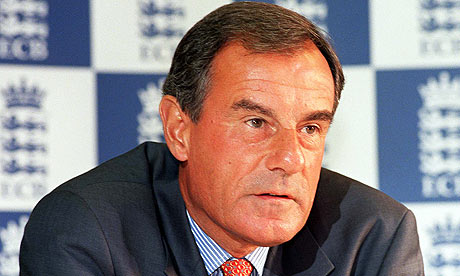
Former Chairman of the England and Wales Cricket Board Lord MacLaurin has recently called for the number of Counties in English domestic cricket to be reduced from 18 to 12 and for other changes. Ian MacLaurin is right, but he doesn't go anywhere nearly far enough. There is no alternative to starting with what we want the outcome to be and then working back to create the appropriate structure. Fiddling with what we have just won’t do.
So let’s start with the outcome. An England team that is competitive in all major International competitions most of the time. To have this there must be a cadre of top professionals who play high class cricket and compete for places in the England squad. For this to happen the competitions in which they play must be world class. So how are we doing? Let’s take spin bowling. Graeme Swann chucks in the towel and who is waiting eagerly and realistically to replace him? Fragile old Monty? Aging Old Boy Treaders? Untested Tyro Borthwick. Some bloke you’ve never heard of in the Warwickshire Seconds who Ashley Giles says is a fine prospect….
Or take the batsmen. Can we really say that we have replaced Strauss, or Collingwood or potentially Trott? Have we a wicket-keeper batsman waiting to take over from Prior?
Then there are the fast bowlers. If Jimmy is off song then the load falls on Broad and can we truly say that Bresnan or Tremlett or Rankin is up there with the class of these two consistently? Or anyone else?
The finding of new recruits of quality for an International team undergoing change is what our domestic system should be delivering. But it isn’t. Why? It is because our finances are spread too thinly. An 18 County system is only sustainable if you sell your soul to Sky and charge the highest prices in the world for international tickets. That is what has happened just so that eighteen historic counties can be subsidised – to do what? Offer contracts to overseas players who won’t qualify for England? Offer sunset homes for past-it old cricketers who are wending their ways to a benefit and retirement. Prop up mediocre teams, with mediocre players in mediocre competitions for no good purpose.
Every Domestic match should be competitive and of such quality that spectators will want to pay to see it. The County Championship is a farce. Poor quality, unwatched and unloved except for a few aging fans who remember how it was in the good old days (Actually it hasn’t been much cop for decades. Since the 1960s when it all started to fall away). The limited overs competitions are marginally better but there are far too many games (a consequence again of the 18 county system) and far too few that really matter.
The solution? Leave the County system as it is but make it predominately amateur with each team having maybe one or two professionals like the Leagues. Play the games at the weekends when players are available. Play on the lovely grounds that grace our countryside not in the echoing space of an empty Lord’s or Old Trafford. Use it as a place for youngsters to learn their cricket and for older players still to entertain us. Make its moderate costs largely self-supporting.
Create an eight team franchise system of new Teams based at International grounds. The Squad of each of the franchises to comprise current England players and England qualified players of real potential. Plus one or two overseas players and one or two recently retired International players as well. Market the competitions (Four Day, One Day, T20) so that each match matters because of the quality of the cricket and the fact that England players will play – let them out of their central contract ghetto to do so. They will want to of course because every match will be a trial for the top, as well as being engaging sport in its own right. Do this and we might begin to get somewhere!
Friday, January 10, 2014
England Cricket - What would Sir Alex have done ?

The idea that an England team without Kevin Pietersen would be severely weakened is true to an extent. That is a statement of the obvious – certainly when we look at KP at his best. But managers/selectors have to look at the team as a whole. For example if we look at Manchester United under Alex Ferguson he was prepared to indulge big names to a degree - but if he did not feel that his team building plans required them he would offload them. Everyone said the team would suffer but United prospered even when the likes of Paul Ince, Jaap Stam, David Beckham, and Ruud van Nistelrooy had left. As Sir Alex says in his autobiography they were offloaded quickly as soon as they became disruptive, or 'brands' (Beckham). Ferguson once said to Tony Blair "The most important thing in my job is control. The minute they threaten your control, you have to get rid of them".
It is sometimes said that cricket is not as much of a team game as football and in a way that is true. At each “play” the bowler, batsman and fielder is on his own. So even a prima donna can perform even though he may be disdainful of his teammates. But this ignores the fact that a squad, especially on tour, spends a huge amount of time together. Fifteen or sixteen men will of course all be different but they will not perform well unless they have a common purpose. In the 2013/14 Ashes the Australian team clearly had a common purpose – to stuff the Poms. Individually some of them are moderately talented players with there being perhaps only two or three of world class. But together they did the job. The England squad was more talented and more experienced but they clearly failed to operate effectively as a team. Two left the tour for reasons unconnected with fitness or injury. Others were marginalised. The common spirit was lacking.
It is for the England management to judge whether Kevin Pietersen or any of the other squad members was a disruptive influence and contributed to the team’s lack of togetherness. Matt Prior has said about the failings in the team:
"Little things like wearing the right kit, turning up to meetings on time, not five minutes late. They appear to be trivial issues to those on the outside but they are important when building a team environment. We talk about the little things that can make a big difference when added up. It is always those that go first and we were not quick enough to realise that."I think that Matt is talking a bit in code here but the tone of his message is clear. England lost the Ashes because they did not work effectively as a team. I think we know what Sir Alex Ferguson would have done in these circumstances !
Wednesday, January 08, 2014
ECB Chairman Giles Clarke will decide on Andy Flower v Kevin Pietersen

In an article in the Daily Telegraph Nick Hoult argues that it will be the new MD of England cricket Paul Downton who will sort out the Andy Flower / Kevin Pietersen spat. I doubt that.
When matters last came to a head it was not Downton's predecessor Hugh Morris who sorted things out - it was ECB Chairman Giles Clarke. Clarke believed that Pietersen was essential to the team in the build up to back-to-back Ashes series. So his (KP's) indiscretions during the South Africa tour of 2012 were forgiven by Clarke who fought tooth and nail to get him back in the team. Flower opposed this as did Andrew Strauss and it came down to a straight choice between Strauss and Pietersen. Strauss went and Flower had to consider his position. He, with some reluctance, chose to stay. So Pietersen won that skirmish but the cost to England cricket was considerable. Flower was not the same man afterwards. Cook was given the Captaincy too early. Hugh Morris's position was undermined as all the decisions were taken above his head.
Paul Downton may nominally have to wrestle with the problem but the strings will be pulled by Giles Clarke. Pietersen has certainly had "support from the ECB hierarchy" in the past. Will he have it again even if this time it really does lead to the departure of Andy Flower?
It was clear that Flower was unhappy with the "rehabilitation" of Pietersen in October 2012 - an initiative which was the personal action of ECB Chairman Giles Clarke. Clarke sacrificed Andrew Strauss to return KP to the team prior to the tour of India. This threw an unprepared Alastair Cook into the Captaincy. In India, and through the 2013 season, Cook was learning his trade – successfully it seemed at first. But in the 2013 home Ashes series his batting form started to slip (Just 277 runs at 27.7) but he had some luck to help him and steered England to a rather fortunate Series win. We all know what was then to happen in Australia - an unmitigated disaster for Cook and England.
Andy Flower should probably not have accepted KP back into the fold in late 2012. If he had dug his heels in then Strauss would not have retired precipitately and though England would have missed KP the batsmen they would arguably have prospered in the absence of KP the individualist.
Giles Clarke will already be back in the fray trying to keep both KP and Flower on board. He succeeded last time, but at the cost of turning Flower into a much less effective coach than he had been before. I suspect that Flower is just too well paid to walk away which must be deep down what he feels like doing. I expect another stich up with the usual ECB weasel words and that Pietersen and Flower will both be there at Lord’s in June. Whether they will be speaking to one another is another matter.
Sunday, January 05, 2014
How bad was that ?

So how bad was that Ashes defeat when placed in the context of Ashes series going back to 1876/77? Well the fact is that there have only been three 5-0 whitewashes by Australia and this was easily the worst. In 2006/7 England under Andrew Flintoff lost 5-0. But in that series England was “only” bowled out in nine of the ten innings and scored 2530 runs compared with a paltry 2158 this time. You have to go back to 1920/21 to find the other 5-0 whitewash. In that series England under Douglas was, as in 2013/14, also bowled out ten times but 2779 runs were scored – far more than in the debacle of 2013/14. The 1920/21 series was called a “disaster” by Wisden.
When it comes to individual performances England's batsmen only scored one century in this recent series (Ben Stokes at Perth). IN 2006/7 there were three and in 1920/21 four. The bowlers fared better than the batsmen and actually bowled Australia out eight times in 2013/14 compared with four in 2006/7 and seven in 1920/21.
In 2013/14 The “best” batsman was Stokes with 279 runs at 34.87. He was the only batsman to average over 30 and none of the team scored 300 runs in the series. In 2006/7 Pietersen averaged over 50 and he, Collingwood and Bell scored over 300 runs and averaged over 30. In 1920/21 Hobbs averaged over 50 and four others over 30 and three batsmen scored over 300 runs (Hobbs 505).
In 2013/14 The “best” bowler was Broad with 21 wickets with Stokes and Anderson taking 15 and 14 respectively. In 2006/7 Hoggard was the best bowler with 13 wickets with three others (Panesar, Flintoff and Harmison) getting into double figures. In 1920/21 only two bowlers, Parkin (16) and Fender (12) took ten or more wickets.
In conclusion in terms of team results and run aggregates this is England’s worst ever Ashes performance as it is in respect of individual batting. The bowling was better and Broad in particular did not disgrace himself. But overall it doesn't come any worse for England. If the match at The Oval in 1882 which created the legend of The Ashes was a cataclysm for England cricket this five match obliteration in 2013/14 was no less so. Statistics don't ever tell the whole story. But this time they do show how bad it was.
Monday, December 30, 2013

Sunday, December 15, 2013
The three lions must be looking away in embarrassment

Victory, as they say, has many fathers whereas failure is an orphan. England’s comprehensive failure in The Ashes in Australia will have plenty of people ducking for cover. For the players there has been nowhere to hide and they should have our sympathy. I do not believe that skilled professionals would play as badly as they have without there being some seriously good reasons. Lets try and explore what they are.
First the whole idea of “Back-to-back” Ashes was a lemon. I don’t buy the “scheduling” reason given by ECB Cricket. Other options existed to avoid the Cricket World Cup fixture clash but Giles Clarke and Co. plumped for the one that they saw as bringing in the maximum short-term revenues. The Ashes is the Golden Goose and the laying of golden eggs for ten Test matches in a row in little more than half a year was just too tempting to ignore. The ECB needs money to keep the hugely overblown County system afloat (18 Counties – three times as many “top” domestic teams as any other Test country!). And Sky of course obliged, as they do, and paid up their fees. Bad money going after bad you might say.
Next England were not as good as the Media hype suggested and the Australians nowhere near as bad. This isn't hindsight. At the end of the Summer series I analysed the five matches session by session. My judgment was that Australia won 27 of the 62 sessions, England 26 and that nine were drawn. The Aussies could well have won at Nottingham, should have won at Manchester (the weather saved England) and might well have triumphed at Durham where an inspired spell of bowling by Stuart Broad was the only difference between the sides. They were blown away at Lord’s – though even there they had their moments. A fair result would have been a drawn series with England retaining The Ashes.
It was an irritable and often downright unpleasant summer Ashes and the players of both sides behaved badly at times. The DRS confusions, poor umpiring, sledging and even urinating on the pitch suggests that the “Spirit of Cricket” wasn't too high on the agenda! And I haven't even mentioned Warner and Root !
In the summer the ECB ran a hubristic promotional campaign that was at best counter-productive and at times downright sick-making. The whole “Rise for the Ashes” was an unnecessary bit of vulgar hype:

Jerusalem was sung every day (except at Lord’s where England seemed to manage OK without it). And the depths were plumbed in the First Test at lunch, with Australia 291-9 chasing 311, when singer Sean Ruane launched into "You Raise Me Up" followed by "Rule Britannia" and finally "Land of Hope and Glory". It was cringe-making and in the long run counter-productive.

Sean Ruane during the lunch interval final day Trent Bridge
All this hype had little effect on England’s performance (as Lord’s suggests) but it must have irritated the Australians beyond belief. So much so that when they got England back on Aussie soil the wounds of the summer were far from healed. They wanted revenge – and frankly who can blame them. Shane Warne summarised the mood in a Tweet once it became clear that that revenge was near:

During the summer I felt that there was little between the sides and I said so. One or two fine bowling performers (Anderson at Trent Bridge, Broad at Durham, Swann at Lord’s) and some solid batting from Ian Bell covered up some pretty ordinary England cricket. Only Bell averaged over 40 and the bowling was at times unpenetrative. Four of the top six run scorers were Australian and three of the top six wicket-takers.
If there was little between the sides in the summer the difference was a bit of luck (always the twelfth man of course) and one or two moments of inspiration. Australia did not do themselves justice batting as a unit only reaching 300 or more in two innings (to England’s six). But they had their moments – and their bowling was pretty good, especially Harris and Siddle. Overall when they were good they were very good – but just a bit too often they were awful.
The rivalry between England and Australia at cricket doesn't need extra hype – certainly not the uber-hype that the ECB launched. The verbals on and off the field went over-the-top as well. So when the Aussies got back home I can imagine that there was some soul-searching. Whilst they could not believe they were robbed in the summer they were certainly hard done by. England on the other hand must have known that they rather got away with it and that they were certainly not 3-0 (nearly 4-0) better then their opponents.
The Ashes in Australia has been a triumph for the Aussies and they thoroughly deserve to have regained the urn. I have never seen an England side in any sport so deflated as they now seem. These are technically very good players whose minds are scrambled and who are like shell-shocked soldiers in the front line. They don't want to be there and when they go over the top the chances are that their bravado will be immediately punished by an Australian side with a great flair for attack and a solid sense of when to defend. The England players have not suddenly become donkeys led by donkeys, though the three lions on their chests must looking away in embarrassment a bit. A less leonine England I cannot recall. Its sad.
Saturday, December 14, 2013
SPOTY - Inward-looking, often maudlin, sometimes downright embarrassing...
I'm not struggling to get my head around Andy Murray's decision to stay away from SPOTY at all, as an article by Giles Smith in today's Times newspaper suggested I would be. I do struggle with the idea that the award is, in the article writer's words, "a pinnacle" of anything. The beanfeest is a bit of fun - worth watching on a cold winter's night if you've nothing better to do. But the outcomes are arbitrary - akin to asking the public to vote for Camembert versus Creme Brûlée versus Tripe and Onions. All worthy foods no doubt - but one better than the other? Nah!

Last year Bradley Wiggins was a worthy winner. But so would Mo Farah, or Jessica Ennis or a dozen others have been. For all of them their "pinnacle" was winning whatever they won. SPOTY more of a pinnacle than two Olympic Gold Medals? Are you having a laugh?
SPOTY is quintessentially British and there's nothing wrong with that. But if Mr Murray has better things to do that's his call - and frankly none of anybody's business. Like other uniquely British institutions - our Royal events and obsessions, Remembrance Sunday and the rest - there is a sense of obligation that we have to stand in line and salute. And there is an overwheening sentimentality underpinning them as well. We might shrug our shoulders and, anything for a quiet life, buy the bull for a day. Most of us do. But when somebody says "Stuff that for a game of soldiers" (or, as in Murray's case suggests by his absence that that might be his view) we have no right to criticise.
SPOTY is a bit of fun for many. It's not the Nobel prize, or an Oscar. It's an inward-looking, often maudlin, sometimes downright embarrassing TV event. To take it uber-seriously as The Times article does is giving it a status way beyond anything it deserves. Nobody is obliged to watch it even less to revere it. Including Andy Murray.
Monday, December 09, 2013
England has been beaten by hubris, and their scrambled minds.
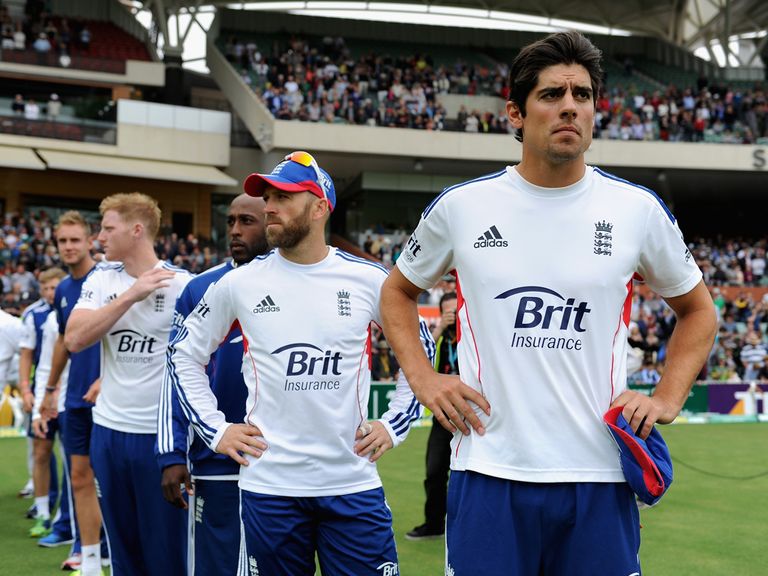
A brilliant bowling performance, like Stuart Broad at Durham in the summer and Mitchell Johnson in the first innings at Adelaide can win a Test match. A remarkable innings can do the same. But these are the exceptions. In the main matches are won or lost because one team collectively gets it together better than the other. If you want to understand why England is 0-2 down in this Ashes series it's not Johnson's heroics you need to study. It's who has won the mind game. Take England's second innings in the second Test. Cook and Carberry both gifted their wickets with dreadful shots within twelve overs. They weren't defeated by better bowling - they were defeated by their own scrambled minds. The fact that later some others in the England innings batted well on a benign pitch shows how foolish those gifted wickets at the top of the order were.
Confidence is the key. The teams that keep on winning are those that believe they can. The teams that struggle are those that look as if they don't want to be on the Park at all. That's been England since they arrived in Australia. They know that they were lucky to win the summer series 3-0 (nearly 4-0). Cool analysis shows this series score to have been a travesty. England (just) deserved to retain The Ashes in the summer - but over the five matches they were only marginally the better team. The players on both sides know this and it is Australia who took confidence from it not England. The Aussie motivation was surely "Mates we were bloody unlucky in England. We know we're better than that. In front of our own fans let's show the Poms we are". Meanwhile the English must have felt, whether they spoke it or not, "We rather nicked that one whatever the series score says. Oz is only a bowler or a couple of big hundreds away from being better than us." And so it was.
This England team hasn't suddenly, qua innate ability, become no-hopers. This Aussie team hasn't suddenly been transformed into world beaters. What has happened is that the hidden factor of confidence combined with the driver of "who wants it more?" is overwhelmingly in the Australians' favour. Successive Ashes series losses finally got to Michael Clarke's Australians. They'd had enough and it hurt. And England? At the moment they had Australia 132-6 on the first day of the series they must have thought "Here we go again - we can roll this lot over any time we want !" But pride came before the fall and from that moment on it has been Australian confidence and determination, combined with English hubris, which has blown England away.
Subscribe to:
Posts (Atom)


