Monday, July 18, 2005

Ashes Series 2005 - Preview


From: "The Emirates Evening Post"

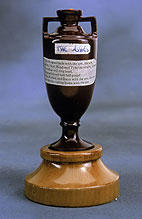
The Ashes series 2005

On Thursday this week the most eagerly awaited cricket contest since the last World Cup will start in earnest at Lord’s Cricket Ground, London when the first Test match of the 2005 Ashes series begins. The build up to this match has been intense not least because of the late start to the series caused by the cricket authorities’ wish to raise revenues with an interminable sequence of 13 One Day Internationals over the past month. But now all that is behind us and the serious business of the summer can at last begin.

ICC Test Championship
1 Australia 132
2 England 111
3 India 107
4 Pakistan 100
5 Sri Lanka 100
6 South Africa 100
7 New Zealand 97
8 West Indies 75
9 Zimbabwe 41
10 Bangladesh 5

The significance of the series (aside from the obvious one that this is one of the oldest rivalries in sport) can be seen from the ICC’s Test Championship table which shows that the battle will be between the two best Test sides of the moment. But the table also reveals what cricket lovers around the world know, and that is that although England may (just) be Australia’s closest rival the gap between the two sides is pretty large.

Australia’s hegemony in world cricket is unparalleled in cricket history. Since they last toured England in 2001 they have played 15 series against other Test nations and their series record is Won 13; Drawn 2; Lost 0. These series have comprised 46 Test matches of which Australia has won 33 and lost only 5.

England’s record over the same period is good, and in 2004 and 2005 it is excellent - 18 Tests played, won 14, Drawn 3, Lost 1. So it is not too much of an overclaim to say that the Ashes series is a contest to decide who really the top Test nation is at the moment.

The two sides are very different in character and experience. The likely England XI on Thursday will have 326 Test caps between them; their Australian opponents will have no fewer than 730. And the average age of the Australian team is 31 to England’s average of 27, truly a battle between experience and promise.

Nowhere is “promise” more obvious than in the selection of the South African born and bred Kevin Pietersen in the England side. Pietersen burst on the international scene in South Africa earlier in the year with some blistering innings in the One Day series but his Test debut will be when he walks out against Australia this week. In some respects the timing of his arrival at the crease may be crucial to the outcome of the first match, and possibly the series. If England are 25-3 when Pietersen takes guard it will be the tyro’s wholly untested powers of application and resolve which will be to the fore. If, on the other hand, the England upper order have fired on all cylinders then a platform of (say) 300-3 may be just what Pietersen needs to give him the confidence to launch a match winning assault on a tiring Aussie attack!

In their top six England have three players who are out and out attackers (Trescothick; Pietersen and Flintoff) and three who are more balanced in their methods (Strauss; Bell and Vaughan). The bias for attack (characterised by the preference of Pietersen for Thorpe) is commendable – whether it is foolhardy we will soon find out.

The experienced Australian side have strength in depth and there are no visible chinks in their armour. England’s best hope is that the bowling attack of McGrath (age 35); Warne (35); Gillespie (30); Kasprowicz (33) may be just past their best – although the younger (28) Brett Lee, who was in good form in the One Day series, will certainly play in place of Gillespie or Kasprowicz. Australia’s batting line up is formidable; any side which has Adam Gilchrist, who averages 55.65 in test matches, at number 7 has to be pretty awesome!

By far the key moments in the first Test will be the first 40 overs of each side. If England can weather the storm of McGrath and Lee and lose no more than one wicket over this period then they could have a platform to build a decent score (if they can master Warne!). If Australia are troubled by the pace of Harmison and the accuracy of Hoggard and lose some early wickets then England might just be able to apply the screws. Strauss, Trescothick and Vaughan versus McGrath and Lee and Hayden, Langer and Ponting versus Harmy and Hoggy are appetising battles to look forward to!

Key Players

Australia

(1) Glenn McGrath. One of the greatest bowlers of all time whose nagging accuracy has been such that he averages only 21.22 runs for each of his 499 test wickets. Is he past his best or will England fire him for one last effort?

(2) Brett Lee. Has not played a Test match since January 2004 when the Indians hit him for 276 runs in the fourth Test match at Sydney. His pace and aggression may unsettle the England upper order.

(3) Shane Warne. Warne is 35 going on 16 and to see whether (like McGrath) the challenge of one last go at the Poms will bring out the best again will be a delight to watch.

(4) Adam Gilchrist. Gilchrist is a phenomenon, completely without fear and with an eye unequalled in modern cricket he can turn a match in a few overs.

(5) Ricky Ponting. This will be Ponting’s first Ashes series as Captain and he will be determined not only to follow successfully in Steve Waugh’s footsteps as captain but also to keep his place close to the top of the Test batting rankings.


England

(1) Steve Harmison. Which Harmison will turn up to play? The one that destroyed the West Indies and New Zealand in 2004 or the shadow that had a miserable tour of South Africa in 2004/5?

(2) Michael Vaughan. By far Vaughan’s biggest challenge in cricket awaits him. Whether he continues where he left off in his last battle with the Aussies (633 runs at 63.3) or whether the burdens of captaincy will affect his form is a key question.

(3) Andrew Strauss. Intelligent and likeable Strauss is unflappable and has made a dream start to his Test career (Averaging 55.12 in 26 innings). The Aussies will be by far his biggest test though.

(4) Ashley Giles. Under-rated, but in form, spinner who took 31 test wickets at home in 2004. Will be needed to stem the flow of runs and force mistakes from the strong Aussie batting line up.

(5) Andrew Flintoff. Lord’s will be his 48th Test match, but his first against Australia. His economical bowling and destructive batting could turn a match.

Sunday, July 10, 2005

Letter in "The Observer" 10th July 2005

Letter published in "The Observer" 10th July 2005

Sir

Sadly, after more than 100 years, I feel that we must now accept that the concept of the British Isles Lions touring team has no place in the modern game of International rugby. The first two Lions tours of the professional era, under two of the world’s best Rugby managers (Graham Henry and Clive Woodward) have proved beyond doubt that a team of players, however good, thrown together just for an overseas tour, will be no match for a fully professional National team. In the amateur rugby days of the past it was the case that there was far less team building than is the norm in the modern era. So whilst New Zealand, Australia and South Africa were somewhat more familiar with one another as a team than their Lions opponents, there was not the focused permanent squad system that characterises the modern professional age. So the Lions could often compete on almost equal terms with their opponents. Today, as the events in New Zealand have proved beyond doubt, a scratch team such as the Lions will be no match for a fully professional top International team like the All Blacks who are totally familiar with one another.

Clive Woodward I think did his utmost to try and create both team awareness and a sense of unity in his Lions squad. He should not be criticised for failing because (with the benefit of hindsight perhaps) it was never going to be possible for him to match the All Blacks as a team. The same would apply to any future tours and I would envisage that the Springboks or the Wallabies would have as little trouble in beating a Lions team as the All Blacks did.

The future of Northern hemisphere rugby has to be based only on the National teams. It is Wales, Ireland, England and Scotland who should in future be the standard bearers for British Isles rugby not the Rag, Tag and Bobtail combination of players unfamiliar with one another and gathered together only for a few weeks every four years, that is the Lions.


Patrick S Briggs

Tuesday, May 24, 2005

Paddy's Sports View 24th May 2005

From "The Emirates Evening Post"

One of the basic tenets of natural justice is that lawmakers should be ultimately accountable to the people over whom they exert justice. This accountability can take many forms and it is by no means only the conventional western model of a parliamentary democracy that provides necessary checks and balances on rulers. But any system that is respected by its people will be one within which they feel they have a voice and in which they feel that justice is fairly administered. Don't worry, gentle reader, "Paddy's Sports View" has not suddenly morphed into a column about constitutional law. But I have been musing on the principles of justice because of what I see to be a trend of increasingly authoritarian and unaccountable behaviour by the rulers of world cricket the International Cricket Council (ICC).

If you have an idle moment I recommend that you visit the ICC’s website http://www.icc-cricket.com/icc/, not because it is particularly exciting, but because you will see there in sharp relief the full panoply of the ICC’s hegemony over world cricket. Included on the site are the “Playing Conditions for Test matches” (24 pages) and for One Day Internationals (30 pages); the ICC Code of Conduct for players (30 pages) and umpires (6 pages) as well as a plethora of other documents which are apparently necessary to govern world cricket today. These also include a four page description of the “Principles of Natural Justice” which clearly seeks to legitimise the ICC’s disciplinary controls. However nowhere in these self created “principles” is there an acknowledgment that for the actions of a law maker to be seen to be fair they must be seen to be accountable to those that they govern.


We are only a few months into the cricketing year and already there have been (believe it or not) nineteen instances of the ICC "court" passing sentences on cricketers for breaches of their "Code of Conduct". So far eight Pakistan players, Kaneira, Akhtar, Razzaq and Inzamam (four times); two Indians, Balaji and Ganguly (twice); one Bangladeshi, Haque; two Zimbabweans, Taylor and Taibu; five South Africans, Kallis, Langeveldt, Ntini and Smith (twice) and one Englishman, Vaughan, have been disciplined. In 2004 there were thirty-four instances of ICC discipline compared with twenty the year before. The workload of the ICC judges is on the increase!

It is difficult to discover what the views of cricketers are on the subject of the ICC’s exercising of its power because for them to criticise what the ICC does would in itself be a breach of the ICC’s own code of conduct and would lead to the player being disciplined! But there are signs that the ICC’s own paymasters (the boards of control of the cricketing nations) are getting frustrated. Recently we have seen Indian board supporting its player Harbhajan Singh in his battle with the ICC over his bowling action. It is only if the individual boards continue to do this that there is any possibility of change.

Whilst the ICC’s “Principles of Natural Justice” do state that players have the right to a fair hearing and to expect that there will be no bias in judgements they nowhere say that the players have any rights in the determination of the processes in the first place. The fact that players are neutered in the ICC’s rule that they must not make any comments about the rulings of officials during (or even after) matches has led to a number of disciplinary procedures (including that against England captain Michael Vaughan earlier this year). This is a clear negation of the principle of natural justice called “freedom of speech” – not surprisingly this is not a principle that appears anywhere in the ICC’s volumes of codes.

The power of the ICC is far too great, in inhibits players, officials and even the executives of ICC member countries from participating in proper debate. It treats the players, in particular, as if they are recalcitrant schoolboys who can only be controlled if volumes of rules are applied to them and if they are disciplined for every breach. I believe that if you want good behaviour from your players the best way to get that is to make them active partners in what you do. The ICC’s rules would be respected far more by players if these players (and/or their representatives) had been part of the process of their creation and if they were active participants in their application.


Tuesday, May 17, 2005

Paddy's Sports View 17th May 2005

From "The Emirates Evening Post"

Amir Khan, the talented young British boxer of Pakistani descent who won a silver medal at the Athens Olympics, has fought his last amateur fight. After he gained revenge over Mario Kindelan (the man who beat him in Athens) in a fight last weekend in Bolton it was announced that Khan would turn professional immediately. Few would blame this young man for seeking to cash in on his skills and few will be surprised that the money hungry world of professional boxing has welcomed his arrival with glee. For every dollar earned by Khan another dollar (or more) will go to the string of managers, promoters and hangers on who will exploit his talent.

The world of professional boxing is poles apart from its amateur equivalent. Fights are far longer and much more gruelling in the professional game. But the most significant difference is that in professional boxing the contestants do not wear head guards which means that attacks by one fighter on the head of another are a normal part of the tactics. And it is this aspect of the sport that is its biggest source of controversy and shame. Can you imagine what it is like to have your head pummelled continuously for more than thirty minutes by an opponent whose primary purpose is to knock you senseless? Amateur boxing is a tough sport and undeniably physical, but a contest is won not by trying to make your opponent unconscious but by more skilfully scoring hits on his body or on his well protected head (rather like fencing). A good amateur boxer will seek to intimidate and tire his opponent - but that is part of many sports (ask a Rugby front row forward!).

The earliest sporting events involved gladiatorial contests and fights to the death. And very thrilling it must have been for the spectator as well (as anyone who saw the movie "Gladiator" can confirm). But societies in the modern world are supposed to be rather more civilised and whilst sporting contests can be tough, physical and mentally demanding there is no legal sport, other than professional boxing, where the primary intention is to put your opponent in a comatose state. The vocabulary of boxing surrounds this objective. We talk about a "Knock out" or a "KO" and about finishing "inside the distance" and the crowds at the events all contribute to this by literally baying for blood if they see one fighter getting on top. And blood they will most likely see as the gloves of the boxers open up wounds around the eyes of their opponents. In the corner at the end of a round the boxer's seconds will work on the damaged eyes trying to stem the flow of blood so that he can return to the ring for more punishment. Even if he is badly injured and behind on points there is always the chance that one of his punches will land a telling blow and the contest will be resolved in his favour. So "back you go and try and put him down - you can still win this one Champ".

The world that Amir Khan is now entering is a sport with more corruption and criminality in it than any other. The amounts of money that a good fighter can generate for himself and others are so high that it is inevitable that the sport has large dark shadowy areas in it away from the glitz and the glamour. The history of professional boxing is littered with the debris of fixed fights, dysfunctional and greedy promoters and crime syndicates. Whilst there is undoubtedly a nobility about a great athlete like Mohamed Ali for every Ali there is a Mike Tyson ( a vicious thug in and out of the ring whose bad boy image was hyped up even further by promoters keen to sell tickets).

Beat somebody continuously around the head for years and you will do him permanent damage. Is there any sight sadder than the old scarfaced boxer stumbling unsteadily to his feet to acknowledge the cheers of a crowd who knew him in his prime. Well yes, actually, there is. That is the sight of the coffin of a young man whose brain was damaged beyond repair in a fight and who paid the ultimate price for others greed. It has happened all too often, and it will happen again, until this barbaric "sport" finally goes the way of the gladiators.

Tuesday, May 10, 2005

Paddy's Sports View 10th May 2005

From "The Emirates Evening Post"


The English Premier league is arguably, along with "Serie A" in Italy and "La Liga" in Spain, the strongest in the world. The Premiership is divided into three very distinct tiers. The super clubs who play in Europe and have the best players and finances (Chelsea, Arsenal, Manchester United, Liverpool); the middle tier some of whom aspire to join the elite (Newcastle, Everton, Tottenham Hotspur…) and the lower tier whose sole real ambition is to avoid the fatal drop away from the top tier (the rest).

The top clubs enjoy enthusiastic support across the globe. Over the past few years the best Italian and Spanish teams of AC Milan, Real Madrid and Barcelona have had the edge in European competitions and the English clubs (Manchester United sole success in 1999 aside) have generally under-performed. Liverpool's recent achievement in getting to the Champions League final (and Chelsea's near miss) can be attributed to the fact that both clubs have managers used to European success. Raphael Benitez at Liverpool and Jose Mourinho at Chelsea understand that to win against continental opposition requires a different style and tactics from what is needed in domestic competitions.

The English league is very internationally visible and Premiership matches are important parts of the sports TV schedules almost everywhere. This is a source of actual or potential revenues to the clubs and the red shirts of Manchester United and Arsenal, and increasingly the blue of Chelsea, are seen on the street from Tokyo to Timbuktu. The Manchester club's revenues from the exploitation of their brand are a major contribution to their resources helping them to afford to buy and pay good players. In a league where increasingly money talks all the revenue streams have to be pursued, unless (like Chelsea) the club is owned by a billionaire with bottomless pockets.

In England the neutrals were delighted with Liverpool's Champions league semi-final success against Chelsea, not least because the win showed that whilst money helps it cannot guarantee success. To be fair to Chelsea, Morinho and the other official at the club know this as well. Although the investment in players has run into the hundreds of million dollars the real reason for their Premier League success this year and their emergence as a real force on the European stage, has been the successful gelling of super stars into an effective team. This has never really been the case at Real Madrid a club which has spent much more than all the top English clubs together over the years, but which has had only the occasional success. Money helps - but consistent success needs more than the handy use of the chequebook.

In North London the respective fortunes of Arsenal and Tottenham Hotspur over the past ten years show that consistency of management, team building and a clear footballing philosophy are the factors which make the difference. The Spurs have a club with a tradition almost as famous as their North London neighbours. They were the first team to do the Cup and League double in the twentieth century, in 1960/61, but they have not won the league championship since. Meanwhile Arsenal has enjoyed great success in both domestic competitions and with their great rivals at Manchester United, has dominated the English scene for a decade or more. The Chairman of Tottenham Hotspur said at the last AGM of the club that the Spurs had probably outspent Arsenal over this same period, but with little or nothing to show for it. It's not just how much you spend - it's how you spend it that counts.

Whilst on the face of it the English Premier league may seem to be a successful enterprise there are some gathering clouds around. Bad behaviour by players and occasionally by managers (on and off the field) damages the standing of the clubs and of the league. And the escalation in pay has been such that some club's finances are very rocky indeed. This is the real problem with the Abramovitch effect (he is Chelsea's Russian paymaster). In assembling a team of all the talents he has done so (in part) by offering more money to players than any other club can afford. Whilst Chelsea's finances are secure that of some of their competitors are not and even Arsenal, with a new stadium to pay for, may struggle to get or keep the best players if Chelsea is in the running. `

Tuesday, May 03, 2005

Paddy's Sports View 3rd May 2005

From “The Emirates Evening Post” 3rd May 2005

Pakistan’s first ever Twenty20 cricket tournament was concluded in Lahore at the weekend with great success. 30,000 spectators clearly had an enjoyable day and Pakistan cricket has received a timely boost to its funds. No wonder the PCB has declared that this form of the game will have a regular place in the domestic season. At international level the first ever Twenty20 match took place in February at Auckland and it was both a cricketing and a popular success - nearly 400 runs were scored by the two sides at close to 10 runs per over.

There are those who feel that Twenty20 is not a genuine form of the game. For example the respected commentator, and ex Test star, Michael Holding has said "What is the point of telling youngsters to watch the game but not to copy the players' techniques? It is not cricket and is a total waste of time.” Holding’s criticism seems to be mainly that the batting technique required to score at ten an over is detrimental to the more pure and elegant style required of the longer form of the game. I think that this underestimates the talents of the really good batsmen who, if they are to succeed, have to be able to adapt their game to any circumstances. A few years ago there was a Test match between England and Sri Lanka at Old Trafford which was badly hit by the weather. After a few days of restricted play England managed to dismiss Sri Lanka late on day 5 and give themselves a chance of a surprise win. To achieve this, however, they needed to score 50 runs in six overs! Trescothick and Vaughan assaulted the Sri Lankan bowling attack to such an extent that they got the runs in five overs – a “Twenty20” scoring rate in a Test match. The point of this story is to illustrate that most cricket is not a continuum of activity but that it always has peaks and troughs. There will be moments even in Test cricket when very rapid scoring indeed is required, and there are certainly periods in One Day (50 over) games when consolidation is necessary. So at the very least Twenty20 can be seen as providing good practice for batsmen to prepare them when they need to score quickly in Tests or ODIs (and for bowlers in trying to prevent them doing this). Once the ball leaves the bat, of course, the fielding task is the same in any form of cricket so Twenty20 should help sharpen fielding skills as well.

The great benefit of Twenty20 is that it brings in new spectators and that income from the competitions goes into the development of the game. Some of the new spectators will come to One Day and Test cricket, although they will have to be a little more patient in their wait for fireworks! What is essential is that a balance is struck between the various forms of the game and that there is no presumption that any one form is superior to the other. Rather than this being inimical to the history of the game it is in fact quite consistent as cricket has always had many forms. In the nineteenth century cricket was played over one day, two days, three days or four days. There were handicap matches when Twenty-two players from a weaker club would play eleven from a stronger club. There were single wicket competitions (one to one match ups) and many other variants. Even Test cricket over the years has been played over three, four, five or more days (including “timeless” Tests, the longest of which was spread over eleven days!).

Whether we are talking about timeless Tests or forty over thrashes cricket is cricket and we need to keep flexible and open-minded about new forms of the game and also about changes to established forms. In this respect I think that one of the good lessons from twenty20 is that it ought to make us look again at One Day International rules. ODI innings sometimes become rather bogged down in that period between the end of the fifteenth over (when the fielding restrictions are lifted) and the thirty-fifth (when the chase to build a total or get a score to win) begins in earnest. Perhaps One Day cricket should learn from Twenty20 and find a way of tweaking the rules so that interest is maintained throughout?

Tuesday, April 26, 2005

Paddy's Sports View 26th April 2005

From "The Emirates Evening Post"


The look on the face of the President of Ferrari said it all – “The gods must be against us”. Luca di Montezemolo is not a man who hides his emotions and when Michael Schumacher made a rare mistake and left the track during final qualifying at San Marino it was just too much for the Ferrari boss. His face and his body language expressed not just disappointment but also revealed that he knew that a supreme opportunity to regain momentum in the 2005 Formula 1 season had been lost. Montezemolo feared that the hard work over the previous three weeks to get their 2005 car competitive had been negated by one tiny error of judgment by his star driver. Schumacher was to have to start from fourteenth on the grid and surely there was no possibility that even he could win from so far back? Maybe if there was rain and he could use his mastery in the wet to cut through the field – not on a dry track and with tyres which so far this season had been uncompetitive.

Michael Schumacher is not normally a man who needs any extra incentives to compete at his best – even after 83 Grand Prix victories and seven drivers’ titles. But the look of thunder on his team president’s face may just have been the spur that Schumi needed to give the performance of his life in this Grand Prix. And Schumacher’s efforts, which all so nearly succeeded, have also contributed to further raising the interest and excitement of this remarkable Formula 1 season. Make no mistake about it at the beginning of the year F1 was on the ropes. For some, Ferrari’s (and Schumacher’s) utter dominance took interest away from the sport. Combine this with political and financial troubles in the administration of F1, and disarray in some teams, and the prospects for the season were gloomy. Ferrari’s early season troubles with a sub-standard car and real problems with their Bridgestone tyres created an opening into which the Renault team and (in particular) Fernando Alonso gratefully jumped. Alonso has been outstanding and there is no fluke at all in his hat trick of wins.

When Michael Schumacher won his first Grand Prix at Spa in 1992 at the age of 23 Alonso was eleven years old - so they are almost a Grand Prix generation apart. Alonso was even younger than Schumacher when he had his first Grand Prix win last year - and this year the young Spaniard has shown that, without question, he has the potential to succeed Schumacher…in due course! I still think that Schumi and Ferrari have the time to turn the 2005 season around and although the twenty-six point gap in the Drivers' world championship, and the twenty-eight point deficit in the Constructors' world championship, will take some catching up I think that they can do it. There are still fifteen races to go in the 2005 season and anything can happen. The key is reliability. If the Ferraris and the Renaults are equally reliable through the rest of the season then Alonso may already have the championship in the bag. The extent of Schumacher’s task is clear. If he wins all the remaining Grands Prix, and Alonso finishes second in them, then it would be Schumacher’s eighth championship – but only by four points. But if Ferrari does start winning consistently, and Renault falter, then Schumacher could have a much more comfortable championship win.

Looking back over the past few seasons it has not only been the brilliance of Schumacher, and the overall power of the Ferrari that has been the reason for their success. Reliability has also played a crucial part. Even when Schumacher did not win his car would reliably deliver championship points - and similarly Rubens Barrichello would come up with the positions which would help deliver the constructors’ title. Whilst some teams have challenged from time to time, these challenges have always faded away. No team has established anything like the reliability of Ferrari and that is now the challenge for Renault. They have a young, hungry and supremely talented driver in Fernando Alonso who, after four Grands Prix, has a commanding lead in the drivers’ championship. Can the engineers and the technical team of Renault now deliver the race after race reliability that a championship win will require? It will be fascinating to see!


Tuesday, April 19, 2005

Paddy's Sports View 19th April 2005

From "The Emirates Evening Post"


Whilst we should perhaps guard against making too strong a claim about the role that cricket has played in the growing political rapprochement between India and Pakistan there is no doubt that the resumption on the field of play has been helpful. The visit of the Pakistan President to New Delhi for the deciding One Day International was both a symbol of the moves towards a permanent peace and an acknowledgement that the shared love of the game of cricket across the two nations can continue to help this process.

The extent of the historic differences between India and Pakistan has understandably cast a long shadow over the cricket pitches for too long. Following the first Test match between the nations in 1952 (Pakistan's first ever Test match) there were regular matches for eight years before the politicians put a stop to cricket for seventeen years. Over those first fifteen Test matches it is possible to detect that the growing political tensions had their affect on play. Whilst the first three matches produced results the next twelve were all drawn - pitches and tactics were such that perhaps neither side could risk the loss of face that losing would have meant with their supporters. After the long gap play resumed again in 1978 when for the first time One Day Internationals were also included in the schedules. Ten years later politics once again intervened and between 1990 and 1998 there was another hiatus with no Test matches and only the occasional One Day International on neutral grounds such as Sharjah or Toronto. Although these matches were often rather tense affairs (and the security officials sometimes had their work cut out keeping the rival spectators apart) the relations between the two teams were generally friendly.

The last India/Pakistan ODI at Sharjah was in March 2000 when, as I recall, Inzamam-ul-Haq had one of his more remarkable days hitting a hundred at better than a run a ball and scoring boundaries all around the ground. The records show that India played Pakistan twenty-four times at Sharjah between 1983 and that last match with Pakistan winning this long "series" easily (by 18 games to 6). It is now two years since the last ODI of any sort at the Sharjah Cricket Ground and there are no prospects for an immediate return of top international cricket to Sharjah. I hope that the long innings of this ground has not drawn to a close - especially as the number of matches is just short of a double century. But whatever happens the CBFS and Sharjah can reflect with pride that when politics prevented India and Pakistan touring each other's countries they kept the cricketing flame alive.

The third politics induced break in regular India v Pakistan matches came after Pakistan's tour to India in 1998/9 but fortunately this was to be the shortest of gaps - let us hope that it is also the last. There is little doubt that India's visit to Pakistan for three Test matches and five ODIs in 2003/4 and the return tour in India, which has just finished, has produced good closely fought cricket. There were positive results in all but one of the six Tests which India edged 3-2, and some sparkling play in the One-Dayers won by Pakistan 7-5. Overall honours even. But more important than what took place on the field was the fact that cricket has been a catalyst for the coming together of both political leaders and the peoples of the two nations.

International conflicts such as that between India andd Pakistan which have endured for generations have only done so because of deep seated problems and antipathies, which it would be wrong to minimise. When I have written before about the role of cricket as a peacemaker in the Sub-continent my postbag has often received heartfelt letters which illustrate how deep the resentments are. There has been so much suffering in the past that to talk of cricket may sometimes seem trivial. But to see the Pakistani president and the Indian Prime Minister together at New Delhi was, I think, a defining moment. Let us hope so.

Finally back to Sharjah. Perhaps it is wishful thinking but it wouldn't it be fitting if the positive role that Sharjah played over the years in India/Pakistan cricket could be recognised with a special "Peace" tournament taking place there once an enduring political reconciliation is signed between the two nations?

Monday, April 18, 2005

Heroes and Villians

From "yes no sorry" Volume 4 Issue 1

Heroes and Villains
By
Paddy Briggs

How Basil D’Oliveira and Nasser Hussain became symbols of all that is good in cricket – and how the cricket administrators of their eras thirty-five years apart conspired to try and defeat them


Two books have been published in recent months which, though very different and about two very different characters, give truth to the saying "What know they of cricket who only cricket know". Nasser Hussain's autobiography "Playing with Fire"[1] and Peter Oborne's perceptive and informed telling of the life of Basil D'Oliveira[2] make equally explicit who the heroes and villains were in their lives. And although these cricketing lives were lived more than a generation apart they give further proof to the adage "The only thing that we learn from the study of history is that we learn nothing from history". The amorality, deceit, intransigence and insensitivity that characterised the woeful behaviour of sporting administrators in Basil's summer of 1968 was more than matched by what Nass had to put up with in the South African summer of 2003.

Coincidentally both Hussain and D'Oliveira are both of mixed-race parentage and whilst race was, of course, central to Dolly's story it also played a not insignificant part in Nasser's cricket life. In an article quoted in Oborne's book John Arlott wrote presciently in August 1968 of the MCC's decision to leave D'Oliveira out of the South African tour party; "… within a few years, the British-born children of West India, India, Pakistani and African immigrants will be worth places in English county and national teams…the MCC's... decision must be a complete deterrent to any young coloured cricketer in this country". Nasser Hussain had been born that very year in Madras and if the ethos of MCC's then position had been sustained it is hardly likely that his father Joe would have brought him and the rest of his family to England a few years later!

Dolly and Nass are in their very different ways heroes of the struggle of cricketers to stand up for what is right, and to be role models of their cricketing times. Peter Oborne tells the moving story of Dolly's childhood in apartheid ravaged Cape Town in the post war years. His prodigious talent was visible early but, of course, he had no chance to fulfil his promise because top cricket in the country was a whites only affair. As a Cape Coloured (the descendants of the mixed white/black relationships of the early decades of the country's history) D'Oliveira was prohibited from moving outside the racially defined boundaries which imprisoned his people. In fact Dolly was light brown in colour and the great fast bowler Wes Hall once told him "In the West Indies you would have counted as a white man!" No matter, Dolly's hated pass (which had to be carried by all non-whites) classified him as coloured, and that was that.

Thanks to John Arlott, the Lancashire league club Middleton and later Worcestershire D'Oliveira was able to pursue a cricket career. Arlott had taken up his cause and Middleton had taken the risk of employing him. After a slow start he succeeded and within a year or two he had qualified for England and was in the Test side. In 1966 and 1967 he scored a total of nearly six hundred runs at an average of 48. He had made himself a fixture in the England side and although there was a hiccup on the West Indies tour of 1966-68 ,and he also suffered form a loss of form in the early part of the 1968 Australian tour summer, he came back for the final two tests scoring a memorable century at the Oval. It seemed certain that he would be chosen for the South Africa tour that winter. Peter Oborne has unravelled with forensic skill the conspiracy, which led to D'Oliveira not being selected, and it reflects extremely badly on the English cricket establishment of the time. In short the selectors, the wider MCC committee and the MCC membership as a whole were of the opinion that "bridge-building" was better than a boycott where South Africa was concerned. England's captain Colin Cowdrey took the same view "Sport", he said at the time, "is still one of the most effective bridges in linking peoples and I am convinced that it is right that I should lead MCC to South Africa." Oborne shows how without Cowdrey's support (despite the fact that it had been promised by him to D'Oliveira) the selectors rejected D'Oliveira on "cricketing grounds alone". This was a charade and although the case for Dolly's inclusion was not water tight, there is not much doubt that factors other than the purely cricketing played a crucial part. The selectors (or enough of them) knew that a touring party with D'Oliveira in it would be rejected by Vortser's Apartheid government (as it was when, in response to huge public interest and pressure, Dolly was belatedly selected when another player dropped out through injury). The cricket establishment had initially conspired to put the retention of white South Africa in the international arena ahead of principle - and they were quite prepared that Basil D’Oliveira should be a casualty of that imperative if needs be.

Roll forward thirty-five years and you might hope and expect that times would have sufficiently changed that the sort of tunnel vision coming from Lord’s in 1968 would all have disappeared in our modern more enlightened age. Not a bit of it. The opening chapter in Nasser Hussain’s book tells in chilling detail how the ICC put profit, pride and prejudice before principle in 2003 at the time of the Cricket World Cup. The issue was, of course, Zimbabwe and whether it was appropriate for England to play a World Cup match in Bulawayo. Nasser led from the front as this issue came to the boil -he wore his heart on his sleeve and he is the only one to come out of this sordid affair with any credit. As was the case in 1968 the cricket administrators were either vacillating and weak (the ECB) or pig-headed and offensive (the ICC).

At a meeting in Cape Town just before the World Cup started Nasser Hussain fronted up to Malcolm Speed of the ICC and he summaries his dealings with him as follows “… I never detected [in Speed] an interest in the spirit and future of the game…the priority was always money”. Speed was not only unyielding he was also contemptuous of England’s captain. Speed cut off the discussion after an inadequate half and hour and when Nass protested, Speed walked dismissively away. The ECB was almost as bad for although he had unanimous support from his fellow English players Nasser received no support at all from England cricket’s administrators at this crucial time. Hussain is particularly critical of the “unctuous” and “unsatisfactory” Tim Lamb who he felt was only interested in “trying to safeguard his own position”. The ECB turned to “emotional blackmail in an attempt to force us into going [to Zimbabwe]”. So Nasser was treated with contempt by one of the leaders of world cricket (Malcolm Speed) and was threatened by his employer the ECB – and all because cricket obsessive ‘though he is he was aware enough to know that when it comes to playing games in countries governed by racist dictators you must take a moral stand and say “thanks but no thanks”.

In the end, of course, England did not tour South Africa in 1968/69 and nor did they go to Zimbabwe in 2003. In both cases if those in charge had seen earlier that to play games in these countries in the prevailing circumstances was wrong then a great deal of heartache and distress could have been avoided. Basil D’Oliveira is today rightly a symbol of what the “Spirit of Cricket” means and Nasser Hussain is one of the Spirit’s most vigorous and articulate proponents. If only cricket administrators had a small part of the principles of these two heroes the world of cricket would be a better place.

[1] Published by Michael Joseph at £17.99
[2] Published by Little, Brown at £16.99

Tuesday, April 12, 2005

Paddy's Sports View 12th April 2005

From "The Emirates Evening Post"


When you have exceptional wealth and international fame and you spend your days playing golf (the game that you were born up to excel at) at the very highest level - and you have achieved all this by the age of 27 - there has to be something special to drive you on. As an Amateur you won the US Amateur Championship more than once and when you turned professional at the age of 22 the expectations of the golfing world were enormous. You were already being hailed as potentially the greatest golfer ever. You did not let them down. Within six years you had won each of the four Majors at least once, including back to back wins in the Masters at Augusta National. Then, inexplicably, you stop winning the big ones. Two whole seasons go by without a Major and it is the other two players in the “Big three” golfing triumvirate who move to the top of the rankings. Your game hasn’t collapsed and you still tower above most other professionals in your awesome power, but you just don’t find it quite so easy to pick up the most glittering prizes. There are mumblings as to whether you have lost your competitive edge and your hunger for success – “How long will the drought go on for…?” is the tabloid headline of choice. Then the “drought” ends, another Major is under your belt and the critics are silenced.

If the above cautionary tale sounds familiar you might be surprised to know that whilst it all applies to Tiger Woods the story is in fact about his only challenger as the “Greatest” Jack Nicklaus! By the age of twenty seven Nicklaus had won seven Majors – at the same age Tiger had won eight and each of them had to get through two barren seasons before winning another. Jack won the (British) Open in 1970 and Woods has, last weekend, won the 2005 Masters. The parallels between the first nine years of Nicklaus’s career as a Professional (1962-1970) and those of Woods (1997-2005) are uncanny .With the Tiger’s win at Augusta the record is that both he and his illustrious predecessor won the Masters three times before the age of 30.

In drawing this parallel between two golfers a generation apart I do so both to signal how unwise it was of some in the media to start to write off Tiger Woods (the headline “Tiger’s slump” became over familiar) but also to show that at this stage in his career Tiger Woods is keeping pace very precisely with Jack Nicklaus. Between 1970 and 1980, the “Golden Bear’s” golden age, Nicklaus won ten more Majors and then, as a nostalgic coda to his Major winning career, he won again at the age of 46 in 1986. That is the challenge for Woods if he wants to be crowned the greatest ever. Beat that Tiger!

There are some who look at golf today and say that modern equipment is of such technological advancement that courses are being tamed and skill differences are being minimised. If the likes of Paul Lawrie, Ben Curtis, Mike Weir, Jim Furyk, Shaun Micheel, Rich Beem… (all one time Major winners in recent years) can win the top tournaments then surely a Major win is possible for any journeyman pro? There is some truth in this (there always was – there are plenty of one time Major winners in history) but what is more important is that more often than not it is the truly class player who wins the biggest tournaments. And in the same way that Nicklaus had Palmer and Player to offer a challenge Woods has Els and Singh.

When Tiger Woods outdrove Chris DiMarco on the long holes in the run-in of this year’s Masters commentators marvelled at his drives of 330 yards or more. To those who think that it is only modern equipment that permits such distance they might look back to that (British) Open in 1970 which put Jack Nicklaus’s Major winning career back on track. In the play off for the title against Doug Sanders Jack showed that he meant business by peeling off his sweater on the play-off hole and hitting the ball 350 yards to the back of the green. And that was with a real “Wood” not a “Metal Wood”. So Jack is still firmly on the pedestal as the finest of them all – but Tiger is back on track to challenge the great man!

Tuesday, April 05, 2005

Paddy's Sports View 5th April 2005

From "The Emirates Evening Post"


There are nineteen Grands Prix in the 2005 Formula 1 season (more than ever before) which means that the championships (Drivers and Constructors) are more analogous with a marathon than with a sprint. With three Grands Prix now completed we are, therefore, still only in the preliminary stages of the race which will eventually lead to the crowning of a champion driver and a champion team. Those reading the runes and trying to predict the final outcome of this year’s championships would be well advised neither to rush to judgment not to place too much emphasis on the results of the early skirmishes. At this stage the main subject for debate both in the media and in the grandstands is whether we are witnessing the passing of the torch from the (in recent seasons) all-conquering Michael Schumacher and Ferrari to someone else. The rising young star Fernando Alonso (thirteen years Schumi’s junior) and his exciting Renault team are the clear favourites to succeed.

The Renault team, impressively led by the flamboyant Flavio Briatore, has made a perfect start to the 2005 season with victories in the first three races. In Formula 1 it has always been the case that what you need to succeed is a driveable chassis, a strong engine and top-class driver in the cockpit – and in 2005 it really does seem that Renault has this combination. When Briatore last won the world championship in the 1995 season with Benetton/Renault he also had all three. There was the young Ross Brawn as Technical Director to get the right blend of chassis and engine and Benetton also had the precociously talented 1994 World champion Michael Schumacher as his number one driver. Despite early season struggles this combination eventually proved unbeatable and both championships were comfortably secured with Schumacher leaving the field behind him in the Drivers’ contest by some distance.

In looking back ten years to the events of 1995, when Briatore was last a winner, I do so not to make predictions of a repeat performance this year, but (on the contrary) to suggest that those who write off Ferrari and Schumi at this early stage in the season need to think again. Two of the principal elements in Benetton’s 1995 success (Brawn and Schumacher) have been the key to Ferrari’s domination in recent seasons. In addition in Jean Todt Ferrari has the best and the most successful Managing Director in the sport. If another team wanted a Driver, a Technical Director or an overall man in charge there is no doubt that these three would be way ahead of the rest on their shopping list (if they could afford them).

So a cool evaluation of the prospects for the 2005 season (with thirteen Grand Prix still to go) would (in my view) still say that Schumacher and Ferrari are the favourites. The Ferrari organisation of recent years does not have the lack of depth that categorised their unsuccessful challenges in the more distant past. Whilst they have failed so far this season this is not attributable to any inherent lack of quality, even less to a lack of resources. Quite simply they have failed to get their new car up and running (and winning) in time for the early season races. Schumacher showed in Bahrain that despite the 2005 car being rushed into service it is a potential winner. He was close to getting pole position with this untested car and he competed close to Alonso for the first quarter of the race distance before mechanical troubles caused his first retirement for mechanical reasons for an amazing 58 races.

For the neutral observer the emergence of the challenge of Renault and Alonso is just what the sport of Formula One needed – and it is also pleasing to see that Toyota has arrived on the scene at last and is competing well. Indeed in the Drivers’ Championship the highest placed driver from the three teams that have dominated F1 since Benetton’s success in 1995 (Ferrari, McLaren and Williams) is Ferrari’s Barrichello in sixth place behind the two Renault drivers, the two from Toyota and David Coulthard who now drives for Red Bull!

Crucially there is now a three week gap before the next Grand Prix at Imola on 24th April. Over this time I expect Ferrari to be working hard to get the gremlins out of their 2005 car. In front of the Tifosi, who will be at Imola in their tens of thousands, I would be surprised if we fail to see a resurgent prancing horse and Schumi or Rubens (or both) on the podium.


Saturday, April 02, 2005

Cheap golf in the Algarve - Caveat Emptor

Sunterra's golfing bargain...


Even those golfers who have never been there will be aware of the reputation of the Algarve as one of the golfing paradises of Europe. Blessed with a splendid climate, and within easy reach of most British airports, the region’s thirty golf courses (many of European PGA championship standard) are a tempting prospect. So when the flyer fell out of my golf magazine offering a week in the Algarve and a free round on the famous Quinta do Lago course all for the sum of £59 it seemed too good to be true. There were, of course, some conditions attached – you had to travel as a couple (no problem, my wife is also a golfer) and you had to arrange your own flights and car hire. This wasn’t a problem either as there seemed to be plenty of low cost flight options to Faro and car hire was competitively priced as well. Flights, car hire and the holiday cost amounted in total to less than £350 for the week for the two us – not bad when you realise that the green fees alone were worth £90.

The company making this remarkable offer was called Sunterra and a close study of the small print on the flyer showed what their game was. “During your stay you are required to attend an informative presentation of holidaying with Club Sunterra…you are not under any obligation to buy, rent or purchase anything should you not wish to do so.” Fair enough. Listen to some sales pitch from a holiday company and then enjoy the rest of the time on the golf course or exploring the Algarve. We decided to give it a go.

The resort where our self-catering accommodation was located is called “Vilar do Golf” and it turned out to be in one of the best positions in the Quinta do Lago area – right alongside the golf course. Our villa was about twenty years old and showing its age a bit – but perfectly acceptable with comfortable furniture and fittings and cable TV etc. On the first day of our holiday we were invited to attend a brief meeting where we met our Sunterra representative Mark. This brief initial chat was obviously an ice breaker – no selling and really just a “get to know you” meeting with Mark who gave us some useful information about the area and, particularly, the golf (he was a keen golfer himself). We were asked by Mark to meet him again in a couple of day’s time when he would tell us more about the Sunterra offer.

We enjoyed our round on the Quinta do Lago course and also began to explore the area a bit before keeping our appointment. By the time that we kept our date we were in a positive frame of mind. The weather was lovely - in early February the temperature rose as high as 18 degrees and the skies were always clear. We had also played the famous nine hole course at Pine Cliffs in Albufeira where you have to drive across a cliff canyon to reach the green at the Par 3 final hole. So we were happy to listen to whatever Mark of Sunterra had to tell us.

We came genuinely open-minded to the sales presentation. This was one to one (or, rather, one to two as we both had to be there) and was clearly going to take some time. In short the Club Sunterra proposition was that you would buy, with an upfront payment, holiday “points” which you could then use in perpetuity to buy self-catering weeks at Vilar do Golf or at their 90 or so other resorts around the world (the weekly points cost varying depending on the quality of the resort and the season). This is similar in principle to Timeshare – but with far greater flexibility in respect of location or season. The idea seemed quite appealing in principle and the presentation (which included access to Sunterra’s website where all the properties were shown) was professional. It seemed clear that the key variables were how much the points would cost, what any additional charges would be, how easy it would be to so spend your points to secure the holiday you wanted and what the value of your points would be if you wanted to sell them later.

A quick calculation showed that if you bought 10,000 points then you would (in theory) be able to buy two weeks (at least) at Vilar do Golf pretty much whenever you wanted. The annual cost of such a purchase was a little under £600 (what Sunterra calls its annual “maintenance and administration charges”) - a hefty enough sum, but not bad if you could buy the necessary points upfront cheaply enough. It was at this crucial point in the discussion that Mark bowed out and his boss Ian came to the table. The sell hardened significantly at this point - now we were in the “Kasbah” with the points not carrying a fixed price but clearly being negotiable. From a start point of more than £26,000 for the 10,000 points we eventually ended up at £12,250 – oh and a free one week holiday (including flights) would be thrown in as an incentive. But we had to commit whilst we were still in Portugal and, although there would be a legal period of grace that would mean that we could cancel when we were back in the UK, it was made quite clear that for this offer to be available we had to make a provisional commitment now. We asked for time to go away and think about the proposed deal. On the face of it looked attractive. Two or three weeks holiday a year golfing in the Algarve – or visits to a huge range of other resorts if that was what we preferred. The points per week and per resort would always be the same so there was inflation proofing built in. The annual charge was quite a lot but although not fixed it did not seem to increase annually by too much. Was £12,250 a fair price to pay for this?

Now journalists are by nature a sceptical bunch – even those of us who write about golf. So after the “haggling in the souk” that the points negotiation had been I thought that I better (belatedly) do some research. A quick Google search on my laptop showed me that the real trading value of the Sunterra offer points was far, far lower than the deal we were being presented with. Many Timeshare trading websites have Sunterra points on offer for as low as £3000 per 10,000 points - and there were plenty of points available on EBay as well for around this cost. We had been asked to pay around four times the going rate for points and (of course) no mention of this market value had been made to us at the presentation.

The other concern thrown up by my internet search was that it seemed that many existing members were unhappy with Sunterra because it was difficult for them to get the exact weeks they wanted in the resorts they wanted. Peak weeks in popular resorts like the one at Quinta do Lago were booked up very quickly and if you were constrained (e.g. by school holidays) then you could well be frustrated. Further investigation showed that there is an active group of dissatisfied Sunterra members who are suing the company for false promises (http://www.sunterrafied.co.uk/) and that the Timeshare Consumers Association has set up a “Sunterra Compensation Group” to act on behalf of members with grievances (http://www.vogas.org/). Amongst the grievances are the above inflation rate annual increase in the “maintenance charges” and the fact that although you have to buy points at inflated prices their resale value is a small percentage of what you paid. According to Sunterra you have to be an existing member to buy points. So if despite the concerns you do find the Sunterra offer attractive (and there are many satisfied customers along with those who are unhappy) the trick is initially to buy as few points as possible directly from Sunterra and then top them up with points bought on the open market!

The buyers’ caution “Caveat Emptor” has always applied when Timeshare has been involved and for the “son of Timeshare” that points based systems like Sunterra’s are it is just the same. I cannot accuse Sunterra of unacceptably high pressure sales tactics, but they were certainly skilled salesman used to resolving customer objections. They never lied to my wife and me, but they were never disclosing the whole truth either. They created goodwill by giving us a week’s holiday at very low cost and once I advised them that we would not be proceeding with the “membership” offer they respected that decision reasonably gracefully. I should, of course, have researched Sunterra before signing up for the holiday. But would I have still taken up the one week golfing holiday offer even if I had know the facts and therefore known that there was little possibility of my buying the points holiday deal - and how I would advise readers of this magazine if they see and are temped by the offer? On balance I think that I would say “go ahead”. Enjoy a week’s golf in the Algarve. Attend the Sunterra sales pitch and politely decline. A bit sneaky perhaps – but not as sneaky as Sunterra’s determined attempt to separate a presumed golfing fool from his money!


Tuesday, March 29, 2005

Paddy's Sports View 29th March 2005

From "The Emirates Evening Post"

In a year when the forces of nature have caused such terrible devastation (including the near destruction of the Galle cricket ground) it may seem churlish to bemoan the way the weather has disrupted some recent sports events. Australia were denied a certain victory in the Wellington Test, the qualifying session became a farce at the Australian Grand Prix and last weekend in Florida the “Players Championship” descended into chaos as severe weather constantly interrupted play on the golf course. Other than doing their best to schedule events when the likely weather conditions will be favourable (something that cricket administrators have not always done in recent times!) there is not a great deal that can be done. Even in Dubai’s glorious winter climate the Dubai World Cup was once delayed a week because of torrential rain and I can recall a similarly rainy Dubai Rugby Sevens a few years ago.

Changing weather conditions mean that there can never be a guarantee of a “level playing field” in sport, but it is reasonable to expect that officials will be consistent. When Michael Vaughan, the England cricket Captain, mildly suggested that the umpires had been inconsistent over their decisions on bad light at the Johannesburg Test in January (something that anyone at the game or watching on television could see to have been the case) the full force of the ICC descended on him and he was fined 100% of his match fee. Quite how standards of decisions making are going to improve if International captains cannot make any comments I do not understand. Certainly cricket is a sport particularly troubled by weather problems and whilst we must expect this to continue we can also hope that umpires and other match officials will apply some consistent rules. Technology ought to be able to help them do this. Similarly in MotorSport it is nonsense to be inflexible during qualifying sessions as was the case in Australia recently. As far as it is possible the officials should try and ensure that all competitors have reasonably similar conditions for their qualifying runs – otherwise the whole thing becomes a lottery.

As my golfing friends will know I am very much a fair weather golfer. Much as I enjoy the game I have no intention of venturing onto a course when the rain is horizontal or when it is so cold that I have to wear four layers of clothing to keep me warm. A few years ago some English friends visited us in Dubai for a golfing week and I arranged for rounds at Creek, Nad Al Sheba, Jebel Ali and Emirates. They thought that they were in a golfing paradise as the sun shone and the temperature hovered around the thirty degree mark. However we were halfway round the Majlis course when quite unexpectedly a huge black cloud appeared from the Gulf and it began to rain quite heavily. I was so astonished that I dithered around not having a clue what to do. My friends meanwhile had put up their golfing umbrellas (I didn’t even carry one) adjusted their golf bags so that their clubs were protected, climbed into their waterproofs and strode unconcerned to the next tee. A golfer used to the changeable English climate comes prepared – a golfer, like me, more used to smearing on the sun block than to wearing “all weather” gear was completely at a loss.

To return to the “Players Championship” which should have been finished by the time you read this (weather permitting!); it is certainly usually a very good competition and is rightly seen as one of the best on the PGA Tour. This has led to some to call for it to be classified as a “Major” but I think that this is unlikely to happen – I certainly hope so. The current designation of three events in the USA and one in Britain (“The Open”) as “Majors” is a historic fact that I have long thought anomalous. Golf is now a world game and it is high time that the five tours (European Tour, Japan Golf Tour, PGA TOUR, PGA Tour of Australasia and Southern Africa Tour) each had at least one “Major” and that the top players were persuaded to show their skills on courses away from The USA and Europe. Why not an expand the “World Championship of Golf” to (say) ten events a year each of equal status - the four current Majors plus new “Majors” in Europe, the Far East, Australasia, South America, Africa and the Middle East?


Tuesday, March 22, 2005

Paddy's Sports View 22nd March 2005

From "The Emirates Evening Post"

I have seen International rugby at all of the grounds in the British Isles over the years but without question the one where the emotions run highest is in Cardiff. It was in 1973 that I went to the old Cardiff Arms Park to see England taken apart by a Welsh team that must rank as one of the finest to have ever played Test rugby. The print on my match programme is fading somewhat but the names are clear and each is a legend (overused word, I know, but accurate in this case). J.P.R.Williams; Gerald Davies; John Bevan; Phil Bennett; Gareth Edwards; Delme Thomas; Derek Quinnell; Mervyn Davies; John Taylor…all members of the Rugby hall of fame. In that match thirty-two years ago England were beaten 25-9 and (I am ashamed to admit) I left before the end because I could not stand listening to yet another rendition of "Land of my Fathers" from the hordes in red surrounding me. The team that won on that day held together for the next five years and won their final "Grand Slam" in 1978. The hegemony of Welsh rugby seemed secure and one wondered what the other home nations (especially England) had to do ever to challenge their power. Well, as we now know, that 1978 "Grand Slam" was actually to be Wales's last for nearly three decades as age caught up the heroes and their replacements never quite hit the same heights. In recent times Wales have sometimes been the worst not the best team in the British Isles and there have been humiliating "Wooden Spoons" for their fanatical fans to cope with. But now the long, long wait is over and a new Wales team has emerged to capture the "Triple Crown", the "Six Nations Championship" and (above all) a long awaited "Grand Slam".

Margins in sport at the top are often so very fine and Wales's triumph has not been all plain sailing. But when it came to the crunch they always had sufficient reserves to prevail. There was an absolute will to win in the squad and formidable teamwork as well, which enabled them to cope with setbacks when they needed to. And then there was also that extra factor - the edge given to them by their extraordinary supporters. Rather as England did in the Rugby World Cup in Australia the Welsh supporters managed to be visible (and make enough noise) almost to turn away matches into home fixtures. At Murrayfield, for the Scotland game, there were apparently 40,000 Welsh fans in the ground. Where they all managed to beg, borrow or steal tickets I have no idea but they certainly out-shouted the Scots on the day. And then at the Millennium Stadium, for the final match against Ireland, there was a sea of red all around the ground and had the roof been closed they would certainly have made enough noise to have raised it. As it was, fine weather and perfect conditions make for a great spectacle of rugby in the open air and there was never much doubt that the Welsh would triumph.

Rugby fans now look forward to the British Isles tour of New Zealand in June. The "All Blacks" have every claim to being the best international team in the world and the fanaticism of their supporters rivals that of the Welsh. But curiously New Zealand seem very vulnerable in the very big tournaments - they won the inaugural Rugby World Cup in 1987 but lost in the final to South Africa in 1995 and have failed at the semi-final stage in the other tournaments. Last weekend a highly fancied New Zealand team lost to Fiji in the final of the Rugby Sevens World Cup in Hong Kong - again a failure by the standards that the All Blacks set themselves. The visit of the British Isles "Lions" to New Zealand will be the first for twelve years. It comes at a time when not only have the All Blacks got some outstanding young talent emerging but when Rugby in Britain and Ireland is very strong. Although the Lions team will be managed by England's World Cup winning coach Clive Woodward it is unlikely that many England players will be in the squad which should be dominated by the Welsh (and Irish) players who made the 2005 "Six Nations" such an exhilarating tournament. And the Lions play in Red as well - the non Welsh supporters better learn the words of "Cwm Rhonda"!

Tuesday, March 15, 2005

Paddy's Sports View 15th March 2005

From "The Emirates Evening Post"

The sign of true champions in any sport, be it a team or an individual, is the ability to win even when not at the peak of your form. When things are not going quite right it is the latent reserves of technical ability or pride or ambition that take over and drive the great sportsmen on - often to an improbable success. We have seen this a few times in the last couple of sporting weeks. By his own exceptional standard Ernie Els was not at his imperious best at the Dubai Desert Classic. He explored parts of the Majlis course which, whilst familiar to many of us, were unknown territory to the "Big Easy". Drives that would usually split the fairway were sheering off and landing amongst the bushes. Putts, which would normally move unerringly to the hole, were stopping short or passing too swiftly by. Of course there was also the effortless birdie, the approach which stopped within a whisker of the hole, and the phenomenal length off the tee which turned the Par fives into fours - but Ernie was not consistently destroying the course as he had in previous tournaments. Nevertheless Els was in the last pair for the final round and you sensed that however well the estimable Miguel Angel Jimenez was playing Ernie had something in reserve. He didn't play particularly well - and Jimenez played superbly - but when it came to the finish it was Els who produced the Champion's flourish to win. As an encore Ernie flirted with a missed cut after a very poor opening round the following week in Qatar but once again clawed his way back and produced the round of the week to win in the end. Back to back wins on any tour are very rare indeed but with Els achieving this feat when not at his best what more can which expect from him in the 2005 season? Quite a lot I think!

Ernie Els is one a small number of outstanding talents at the pinnacle of professional golf. With Tiger Woods return to the best of his form, and with Vijay Singh's ambition undiminished we can anticipate a few stirring battles between these three this year. It will be interesting to see whether this triumvirate maintain a gap with the rest or whether Mickelson (also a back to back tour winner this year) or maybe a new face will join them at the top. Perhaps that new face will be Padraig Harrington whose win at the weekend in the Honda Classic was his first on the PGA tour. The Irishman's final round of 63, which had only five pars in it (along with eleven birdies and two bogies) was nothing short of astonishing.

If the ability to turn a weak sporting situation round and to drag success from the jaws of failure is the mark of a true champion then no individual nor team has this quite to the same extent as the Australian cricket team. It is easy to forget that the Aussies do, occasionally, get themselves into difficulties that would destroy weaker teams. In the First Test match at Christchurch last week New Zealand had Australia on the ropes. The Kiwis scored 433 in their first innings and then reduced Australia to 201-6 a position from which the New Zealanders must have expected to force a win. The reason that the Aussies are a great team is that when they are in trouble someone always "steps up to the plate". Centuries from Katich and Gilchrist and fine bowling from Warne and Gillespie gave Australia a comfortable win in the end.

Finally in a week of sporting comebacks it was also good to see a Pakistan team show real character to deny India a win in Mohali. Pakistan have too often in recent times fallen well short of the results that their individual talents should deliver. Their recovery to draw the First Test match was a fine achievement and maybe they will have now established the confidence that will ensure that the series in India will be competitive. Confidence comes from self-belief as the achievements of Ernie Els, Padraig Harrington and the Australian and Pakistani cricket teams have shown us. The great sports stars can always inhale the rarefied oxygen of self-belief when they need it the most.

Tuesday, March 08, 2005

Paddy's Sports View 8th March 2005

From "The Emirates Evening Post"


The strike of players in the National Hockey League in the United Sates and Canada is one of the more extreme examples of player power in sport in recent times. It is difficult to feel much sympathy for the players whose average earnings approach $2m per year and whose on-rink behaviour rarely sets an example that young spectators could admire. That player earnings have reached these levels is a characteristic of American sports where the normal economics that govern businesses do not really apply. The drive for success of the owners of Baseball, American Football, and Basketball and Hockey franchises in North America is such that they are quite willing to give almost unlimited sums of money to the teams to try and get it. Much of this money goes to the players. In a recent book, "Leveling the Playing Field", Paul Weiler calculates that in 1947 the average baseball player earned $11,000 a year, a little more than four times the pay of the average American worker. By 1999 the average baseball player was earning $1.57 million, while the average worker earned just $28,000 - a ratio of 56 to one.

Whilst North America is the extreme example of sporting salary escalation it is clear that the phenomenon has spread to many other sports and other parts of the world. David Beckham’s salary at Real Madrid, for example, is $8 million dollars and the rest of the “galacticos” in the team will not earn much less. Whilst Real Madrid is a big business generating substantial income from ticket sales, media rights and sponsorship you can be sure that it is still not big enough to cover these huge player costs. As is the case in England with Chelsea, and their Russian benefactor Roman Abramovich, the only way that these salaries are payable is because a billionaire owner writes the cheque.

Far removed from the rarified world of American sports and European football is the current shambles in West Indies cricket. The West Indies is the poorest of the major Test playing countries with far lower income from sponsorship, ticket sales and other sources than (in particular) Australia, England, India or Pakistan. West Indies cricket has run at a substantial loss for around five years and although a new sponsorship deal giving West Indies cricket around $5m a year has been negotiated with the phone company Digicel this is only a fraction of the sponsorship income of other major countries. The West Indies Board proposal would mean that a top player (Lara or Sarwan) who played in all of the Windies Test and One Day internationals would earn around $210,000 per annum (retainer and appearance fees). This compares badly with the earnings of the top players in other Test nations – Ricky Ponting’s salary is around $500,000 and Michael Vaughan’s is even more. And both these two international captain’s will more than double these earnings with personal sponsorships and other related income.

The financial basis of England cricket is secure following the $400m TV rights deal negotiated at the end of last year and a significant proportion of this income will go to the England contracted players. Cricket Australia is currently locked in negotiations with the Australian players but it is unlikely that the outcome will be anything other than a deal giving the players good earnings. So it is understandable that Brian Lara and other West Indies stars have sought to augment their more modest salaries with personal spronsorhip deals. The problem is that these deals include ones with Digicel’s competitor “Cable and Wireless” – and that is a situation which the Windies Board, understandably, finds unacceptable and is one of the principal causes of the current problems.

Whilst the greed of North American hockey players brings that sport into disrepute and will have caused long term damage the plight of West Indies cricketers is one that we can regard with much greater sympathy. It is no exaggeration to say that the very future of cricket in the Caribbean is in the balance at the moment and, with the Cricket World Cup in the region only a couple of years away, this is a worrying situation indeed. This is an issue that should be fairly high on the International Cricket Council’s agenda – but they seem not to be in the loop. Curious priorities!


Thursday, March 03, 2005

Paddy's Sports View 1st March 2005

From "The Emirates Evening Post"


The recreational game that most club golfers play is, of course, “Match Play”. You turn up on a Sunday morning and have a friendly single (or more often fourball) against other club members for a modest prize – then you repair to the nineteenth hole for a convivial post round tincture before going home to the long suffering wife. The appeal of “Match Play” is both the competitive element and the fact that if you do have one or two disastrous holes (and most golfers do) it is not the end of the world – you can always try and come back at the next and repair your loss. In professional golf, however, “Match Play” is comparatively rare with only the “World Golf Championships Match Play Championship” (played last weekend in California) and the similarly named “World Match Play Championship” (played at Wentworth in the Autumn) in the calendar. The PGA Championship used to be “Match Play” as well but it switched to four round stroke play (like the other three “Majors”) many years ago. Given that the peak for most professional golfers on both sides of the Atlantic is to play in the biennial “Ryder Cup”, which is of course also “Match Play”, it may seem surprising that this form of competition is not played more often at the top of the game.

As is so often the case in sport these days, the reason that that there are not more “Match Play” tournaments has to do with strictly commercial considerations. The TV stations that covered the “World Golf Championships” took a gamble that the Final, played on the key day of Sunday when the potential audience is at its peak, would make compelling (and, therefore profitable) television. Had the match been Tiger Woods versus VJ Singh, and had it gone to the 36th hole, then the gamble would have paid off. Unfortunately for the TV and the sponsors this year this did not happen and whilst no disrespect to David Toms and Chris DiMarco is intended, the match between these two was unlikely to rivet many to their seats in front of the TV. Indeed not only was a match between the world’s number 16 and the world’s number 18 unlikely to glue people to their screens but Toms was so dominant (winning 6 and 5) that the match was over an hour early – a disaster for the TV schedules!

It is said that today we live in a world dominated by celebrity and this is certainly true for professional golf. The value of a tournament is greatly enhanced if Tiger Woods is in the line up and that is why the appearance money that he receives far exceeds his potential earnings as a winner. The same applies, but to a much lesser extent, to Singh and to Ernie Els and a few of the rest of the golfing elite. In this week’s Dubai Desert Classic Els (twice a winner in the past) is the one really big name. The rest are either fading stars from the past (Montgomerie, Norman, O’Meara, Bjorn…) or journeymen Pros from the European Tour. This does not mean that it won’t be a compelling event - the quality of the course and the excellence of the organisation always make the Classic a truly splendid experience for spectators at the course, but the TV audiences will be small (especially in the USA). The (US) PGA Tour is unrepresented this year with the only Americans playing being defending champion Mark O’Meara (World ranking 100) and sponsors pick Ben Curtis (world ranking 137).

Ben Curtis has had a terrible time on the Tour since his astonishing win in the 2003 “Open Championship” at Royal St George’s. You do not win Majors unless you are a very good player indeed and Curtis is certainly that. But it must be humbling to be brightly in the spotlight, Open Champion and “Rookie of the Year” one minute and really to be nowhere the next. Whether the “Open” in 2003 will prove to be Curtis’s only “fifteen minutes of fame” remains to be seen. The Desert Classic is an ideal opportunity for Curtis to recover his form and prove the doubters wrong. He is away from the glare of the American media and whatever pressure he may have felt last year as always being announced on the First tee as “Open Champion” will have been removed. Good luck to him and to the rest of the competitors in what should be a great golfing week.

Tuesday, February 22, 2005

Paddy's Sports View 22nd February 2005

From "The Emirates Evening Post"


The last time that the Olympic Games were held in London in 1948 I was eighteen months old - so I cannot share with you any personal reminisces. But I do know that to hold the Games in a city still devastated by German bombing, and in a country struggling to recover from the after effects of that conflict, was a courageous thing to do. The 1948 Games were a great success attended by huge crowds and in more ways than one the Olympic movement was helped back on its feet by London's capital. Aside from the symbolism of replacing armed conflict between nations with sporting challenge there was also the recognition that the Games had to be wholly apolitical. The previous Games were in Berlin in 1936 and they were used by the German regime as an opportunity to showcase the Third Reich in all its ghastly glory. That Berlin '36 damaged the Olympic movement was beyond question and that London '48 helped re-establish the movement's significance and its principles is also true. So London has an important place in the history of the Olympic Games - a fact which the 2012 London bid team I am sure will have talked about when the Games evaluation committee visited the city last week.

Whilst London has some emotional capital still in its bank from 1948 that is unlikely to be a very significant factor when all the Olympic committee members vote in July as to the venue for the 2012 Games. As a Londoner I very much hope that London will be chosen, but I am still worried that our bid, excellent though it clearly was, will fail for reasons other than the purely practical. As far as facilities are concerned London has a large area of land in the east of the city which is in strong need of rejuvenation. The Olympic Park will transform the area, a factor that the evaluation committee has apparently taken seriously and has welcomed. Indeed it is unlikely that the committee will have been disappointed on any of the practical considerations. Transport, accommodation and sporting facilities available either are, or will be, well up to Olympic standards by 2012. With the new Wembley Stadium, Wimbledon, Henley and even Lord's cricket ground being venues for various events there is a good muster of places with true international sporting resonance in the plan. It's a very good bid and with the clever and well-connected Sebastian Coe heading it up it should have every chance.

In the final analysis the decision will come down not so much to the practical issues - expect the bids from Paris, New York and Madrid (if not Moscow) to be equally proficient - but to emotional and political considerations. In one respect London has a real advantage emotionally, not just its honourable history from 1948, but its unique status as a global city. In the last 50 years or so London has become home to an extraordinarily diverse mix of peoples. One of the British newspapers recently published a map, which showed the extraordinary ethnic mix of the city - virtually every national, racial and religious group is strongly represented. This multi-culture adds hugely to the character of London and it is rarely a source of tension. New York was in the past similarly diverse, but in recent times it seems to me when I have been there that it is more introspective and less inclusive and welcoming (perhaps understandably in the post 9/11 years). Paris is quintessentially French and Madrid proudly Spanish - nothing wrong with that, but they are not international cities in the way that London is.

So we can expect that most if not all of the Olympic delegates in Singapore in July will have positive feelings about London and that many of them will see it as a second home. But London is also the capital of the United Kingdom and in the same way that the Iraq war will have dogged (even destroyed) New York's chance London may suffer by association with the UK's involvement in that conflict. If you are a delegate who believes that the Iraq war was wrong (as many will), and you have on the one side three cities (New York, London and Madrid) from countries that instigated the war and on the other side Paris the capital of one of the most resolute opponents of the war, this may well sway your vote.


Tuesday, February 15, 2005

Paddy's Sports View 15th February 2005

From "The Emirates Evening Post"


Algarve, Portugal

Having written a couple of weeks ago about the problems with water shortages being faced by the operators of golf clubs in South Africa I found the same situation last week in the Algarve in Portugal. Here there has been little rain for three months (normally a rainy season) and restrictions on water usage means that the fairways are uniformly brown - and at some courses the greens are suffering as well. The talk in the clubhouses is of climate change – and it does seem that the golf industry is going to have to rethink its plans. There are, of course, rather more urgent social and economic consequences of drought than the effect it has on golf resorts for the rich. But if golf course development proceeds without properly sustainable environmental planning then it seems that around the world the game will have a seriously negative effect on the quality of life.

In the Algarve there are now around 30 golf courses, mostly resorts with hotels, apartments and villas dotted around the holes. The courses are generally excellent (water shortages notwithstanding) and if you visit off-peak the green fees are not exorbitant. We played the famous Quinta do Lago courses where the Portuguese Open is regularly played and our round cost 60 Euros ($80) – not unreasonable for a championship course of this quality. The Algarve region, especially along the coastal strip, is something of a golfers’ paradise and there are many permanent residents for whom golf is their life. What surprised me was how many of these are English! In the clubhouse of two clubs that we visited, “Pinheiros Altos” and the “Old Course” at Vilamoura, the sphere was so English that you could have been in Tunbridge Wells. I am tempted to burst into verse about this expatriate enclave as I am sure that there is plenty of material for a poem or two along the lines of my “Jumeira Jane” book (still available in all good book stores in Dubai!).

Property prices in the Algarve have gone through the roof in recent years. A small (two-bedroomed) terrace house on a golfing estate will set you back around half a million Euros ($650,000) and if you want a larger family home you would pay twice that amount. Whenever the word “golf” is attached to anything the price increases, but there is no shortage of willing buyers it seems. Golf, unlike any other sport or pastime, has become not just a game but a lifestyle. For the well-heeled retired (or semi-retired) person a life in a pleasant climate, with a house on a golf course and membership of a club whose members are kindred spirits, is quite an attractive proposition. This, of course, is also the offer in the Middle East – especially in Dubai and soon also in the Oman. But the Algarve has the advantage of genuine all the year round golf (unlike Dubai where only the eccentric will play in the blisteringly hot summer months).

Golf is really the only sport that you can play well into your sunset years. Indeed retirement communities around the world (mostly on the Florida model) are often built around a golf lifestyle. In the Algarve, if you are well heeled, you can live in true golfing splendour. But even those with more limited budgets can enjoy a golfing retirement in the region. If you are prepared top live away from the golf estates then property is available to buy and rent at much more modest costs and membership and green fees at the less fashionable clubs is also more affordable. Another option, if you already own a home elsewhere and only want holiday visits, is to buy a quarter-share in a property. Whilst this is not quite the same as owning your own home outright it is an attractive idea for those retirees who do not want completely to relocate.

My own golfing limitations are such that I am unlikely personally to try and create a “live to golf” way of life – I would be a candidate for psychotherapy very soon if this is what I chose to do. But it is enjoyable to play golf in different countries and to encounter new golfing experiences. In the Algarve there is one golf hole that is worth the visit on its own. The ninth at “Pine Cliffs” is played across a cliff (see photo) and I am only telling you about it because, yes, your correspondent did drive the green!


Tuesday, February 08, 2005

Paddy's Sports View 8th February 2005

From the "Emirates Evening Post"


As is the case for senior managers in so many areas of modern life one of the key challenges for top sports administrators is to find the right balance between the need for change and the need to preserve good traditions from the past. Global sports such as Cricket have undergone major changes in recent times in response to challenges that are (in particular) caused by the greater commercialisation of the sports.

Sport has to reflect the mores and behaviours of the times. A sporting world where the principle driver is often commercial, and the principle measure of success the amount of income generated by an event or paid to a sports star, is very different from the mainly amateur world of less than 50 years ago. But when sports administrators consider issues which could lead to a significant change to their sports they need measures and advice which go beyond the strictly commercial. Cricket, in particular, is a sport which has a huge inheritance from the past and part of the charm of the sport is that those of us who love it wish to see all the good traditions preserved. Some of these traditions may seem somewhat barmy to those who are not steeped in the sport. To play a five day Test match only for it to end in a draw may seem odd to some who feel that sport always has to have a winner (try explaining it to an American!). But no-one (I hope) would suggest that if at the end of a Test match the game ended in a draw there should be some sort of “tie-breaker”. Draws are part of the game - which brings me to the whole area of cricket records and statistics.

Cricket is a sport in which the variants of types of game are greater than any other. It is played over any period from one to five days. Limited overs matches range from 20 overs to 50 overs per side and the Laws are amended depending on the type of game. What constitutes a “First Class Match” is subject to a rigorous check by the cricket gurus and the same applies (with even greater rigour) to the definition of what is a Test Match and what is an “official” One Day International. In the latter case, in recent times at any rate, there has been little room for debate. There are Test playing countries and when they play one another over five days in a properly sanctioned event then it is a Test Match. Similarly when these countries along with a number of others (like Canada or the UAE) play one another in sanctioned 50 Over “Limited Overs” matches then it is an official One Day International (ODI). All cricket records reflect the established practice that Test matches and ODIs have been played on this basis. But it is possible that this is about to change. The International Cricket Council Executive Board has ruled that the Tsunami relief matches between Asia and the Rest of the World (ROW) will be given official ODI status. Further there is pressure on the ICC Board from their own Chief Executives’ Committee to accord the same status to the one day matches to be played between Australia and the ROW later this year (the so-called “Super Series”) – and even to give Test match status to the six day match to be played at the same time.

The cricket world can be proud of the Tsunami matches which did everyone involved great credit. But there is absolutely no need to distort cricket’s records by calling them official ODIs (which they patently were not). There is even less justification to call the upcoming “ICC Super Series” official ODIs or the six day match a “Test match”. The ICC’s rules clearly state that ODIs and Test matches can only be played between countries. The ICC can change its rules, of course. But to do so would distort cricket’s records to no benefit other than some expectation that the matches would be more commercially successful if they are accorded “official” status for statistical purposes. If the ICC wants to ignore tradition and history solely because they think that the income streams from sponsorship and media rights would be higher then that is an example of a sporting administrator which has got its priorities all wrong. But I wouldn't put it past them!'


Tuesday, February 01, 2005

Paddy's Sports View 1st February 2005

From "The Emirates Evening Post"


The 56th Formula 1 season is only a month away – the season’s opener takes place in Melbourne on 6th March and the teams are well into testing of their new cars. As is now customarily the case the “off season” has been reported as having been characterised by an unseemly struggle for power at the top of the sport. I have been watching F1 for almost as long as it has been in existence and have become deeply sceptical of such reports. This is not because such struggles don’t take place, but because, in modern times, the sport’s supremo Bernie Ecclestone always emerges in charge – and usually unscathed. Like any serious global sport Formula 1 is a business as well as a series of competitive events - and a world scale business at that. Bernie is a single-minded leader, not as autocratic as some would think, but nevertheless a man who knows that the commercial fundamentals of the sport have to be right if it is to succeed.

I have been fortunate to have been fairly close to two great Formula 1 teams over the years (McLaren and Ferrari) and I can certainly say from my own experience that it is true that many businesses could usefully learn some lessons from them – although they are completely different from each other. McLaren is a team with a single-minded, almost obsessive, leader at its helm in Ron Dennis. Dennis has been in charge at McLaren for twenty-five years during which time the F1 drivers championship has been won nine times with four different drivers (Lauda, Senna, Prost and Hakkinen). The last win was in 1999 and whilst Dennis has experienced similar fallow periods before, you can be sure that he will be determined that the failure of 2004 is not repeated this year. Last year the best McLaren driver (Raikkonen) finished only seventh in the championship and drivers from BAR and Renault (as well as Ferrari and Williams) finished above him. This will not have pleased Ron! This year Raikkonen is joined in the team by Juan Pablo Montoya and if the new McLaren car can perform well from the start either of them has the natural talent to be world champion.

Standing in the way of McLaren and all the other aspirant champion teams is, of course, the formidable Ferrari team and the extraordinary Michael Schumacher. Since the passing of Enzo Ferrari in 1988 there has never been a single individual at the helm – Ferrari is much more of a complete team than McLaren or Williams. Whilst the drive for success is just as great I have always been impressed that Ferrari’s recent imperative has been to assemble a team of all the talents. The team’s overall director is the quiet and rather undemonstrative Frenchman Jean Todt and he acknowledges that the team’s success is attributable (in particular) to the partnership he has with Technical Director Ross Brawn and, of course, Schumacher ( it is remarkable that team as nationalistic as Ferrari none of these three is Italian)

One of the most fascinating things to watch in F1 in 2005 will be to see whether the success of BAR and Renault and the comparative decline of McLaren and Williams will continue. If we look at championship wins over the past twenty years the successful teams are McLaren (8 wins) Williams and Ferrari (5 each) with only Benetton (in 1994 and 1995) breaking their dominance. Benetton’s driver was, of course, the young Michael Schumacher. Predicting outcomes in sport is a hazardous game but I have a feeling that we will see Ferrari continue their success this year - but that the gap with McLaren will have been narrowed a lot. I would be surprised if Williams (who have yet even to confirm their second driver behind Mark Webber) mounts a serious challenge. I would expect the real challenge to Schumacher will come from his team mate Rubens Barrichello, the two McLaren drivers, Jensen Button of BAR and Renault’s brilliant Fernando Alonso. It could be a very exciting year and let’s concentrate on the sport and try and ignore the political and power dances at the top if we can!