Monday, August 18, 2008

Can England's cricket failures learn from British Olympic success ?


Will the England and Wales Cricket Board study the success of British Olympic competitors in Beijing and learn any lessons from them? More likely it won't even occur to the top people in the ECB that to make a comparison could be fruitful - in recent times the only comparative outsider at the top of English cricket (Ian MacLaurin) gave up in disgust. And one of the reasons was the cliquey, clubby insularity of the ECB board members all of whom had a vested interest in perpetuating the absurd 18 County system - a system that has so demonstrably failed to deliver.

England has yet to win a Cricket World Cup and has abjectly failed in the last couple of World Cup events. England's one-day side is easy meat for almost anybody and we have failed to create one single One Day player of true quality (the imported Kevin Pietersen is not, of course, a product of the English domestic system). In the Test arena it is not much better. Again KP is the only player we have that other countries would covet. The ECB was blinded by the successes of 2005 and was bereft of a plan to build on them. In 2005 twelve players ably led and skilfully coached worked together as a unit for a few glorious weeks and managed to make the team bigger than its collective parts. Not one player has pressed on from 2005 (KP again excepted) and the 2006/07 Ashes tour was a shameful shambles. To succeed the inspiring and clever outsider Duncan Fletcher the ECB appointed a County stalwart in Moores who has done no more than preside over decline. Michael Vaughan has walked away from this whole farrago in disgust, and who can blame him?

Back to the Olympics. The British rowers and cyclists and sailors and boxers are succeeding for a whole variety of reasons that the ECB could learn from. Well coached and motivated they also have a work ethic that would mean that they would look down with scorn on Pedallo excesses and their like. Every medal-wearing interviewee has paid tribute to his or her coach - and every coach has paid tribute to the efforts of their charges. That's why they win. There are no distractions like phoney dollar-spinning frolics in the Caribbean to look forward to - "just" the honour or representing your country. Compare that with, say, Steve Harmison telling England that he would personally pick and choose the games that he would appear in. And the ECB cravenly going along with this.

But it does, as things so often do in sport, also come back to money. Whilst the ECB squanders its substantial resources from TV rights and ticket sales by handing them to 18 counties these very counties are in return contemptuous of the needs of England cricket in their selfish pursuit of spurious glory. So what if half a County team (or more) is not even English - that's better than the Arsenal isn't it? Can you imagine the British Olympic Association funding the development of athletes who are going to appear for another country and compete against Britain? Of course not. Then why do we tolerate this in English second tier cricket? It's amateur and insular and run by ignorant men with narrow vision. Thank God for the Olympics.

Wednesday, July 23, 2008

What's wrong with England cricket ?


I am amazed how the bloggers on the blogosphere, including some that should know better, think that England's problem is one of selection. They roll out their tired old diatribes about the inadequacies of one player or another and then honour us with their XI, as if they have some extraordinary insights denied to mere mortals (like the Selectors, for example). The twenty or so cricketers in the frame for England at the moment are all decent cricketers and you should be able to perm any eleven from the twenty and get a side that will win you matches - even against the toughest opposition. So why don't we win?

The answer is to do with leadership and motivation, pride and cojones (or the lack of them). Under Duncan Fletcher and Michael Vaughan twelve players (all of whom, bar Trescothick, are still in the frame by the way) fought like tigers and played, at times, like Kings. They built a relationship with the spectators in the packed grounds and vicariously via the media with millions around the country. Every over, every session, every day and every match mattered to every single one of them. Each player did what he was best at and every player fought like hell to support his team-mates. When Geraint Jones had a few problems at Trent Bridge an interviewer asked Fred Flintoff whether there were doubts about Jones - "Not in our dressing room there aren't" he said.

The focus, the pride, the ambition, the courage, the flair and the style (day one at Edgbaston for example) of England in 2005 was quintessentially Australian! England out-Ozzed the Aussies over those glorious weeks. Roll forward to today and a squad made up of broadly the same (or the same type) of players under the same Captain is nowhere. Outplayed in every department at Headingley and out-battled by a cojones-full Saffer side at Lord's. Was the Second Test eleven that much worse than England 2005? I don't think so. Cook is a different player to Trescothick but no less talented. Monty is a better bowler than Gilo. Ambrose looks to be as good as Jones. Anderson, on his day, is on par with Simon Jones. And so on. Nothing much wrong with the selection of the England sides in the first two Test matches in my opinion - quality players all (I leave out Pattinson whose selection was an aberration which hopefully won't be repeated).

So what's wrong? Well lets start with the ECB and their unspeakable head Giles Clarke. Clarke has his eye not on the ball of creating an environment within which England cricket prospers but solely on the main chance of $$$$. The Stanford deal is an obscenity with no cricketing justification whatsoever. I for one don't begrudge the players their chance to get rich. But not like this. Inevitably every England squad player will have at least part of his mind on Antigua, and when a part of your mind is distracted then you are sub-optimally using the rest. Even Michael Vaughan, no Twenty20 star he, started to play a bit of Twenty20 almost as soon as the Stanford deal emerged. I don't blame him for that, but it was a distraction that our Test Captain could have done without. So Clarke, and his sidekick Collier, instead of focusing on a challenging series of international matches that really matter, home and away, spent their time trying to screw as much money out of cricket as possible whilst keeping the counties happy. They would have been better advised to read William Buckland's "Pommies" which brilliantly gets to the truth of what is wrong with English cricket and suggests that we need to be more Australian, not just in style and ambition, but in our domestic structure as well. I agree.

I am unimpressed by Peter Moores who seems far too much of a county insider to me. Fletcher had some county experience that he used shrewdly, but he was a winner because he wasn't hidebound to the so-called traditions of English cricket at all. And, glum old bugger that he could sometimes be, he built a partnership with Michael Vaughn and the other senior players in the squad which won The Ashes. Not a bad model!

So what to do? Firstly try and get Clarke and Collier to focus on the real job in hand - or get rid of them if they can't. Second get rid of Moores - he looks like a loser and that rubs off on the side - and get a foreign coach of real quality (welcome back Rod Marsh?). Third select a squad of the best twenty cricketers in England with a balance of youth and experience (welcome back Ramps) and every single one of whom can play cricket in any of the three forms of the game. Work with this squad in every which way - boot camps not excluded if that is what the coach thinks will help! Fourth get rid of the selectors. Give your new top coach full control over selection - aided by a small team of experienced talent spotters if you like - but make the coach an Alex Ferguson or an Arsène Wenger. Finally make Michael Vaughan the Ricky Ponting of England - captain of all the England sides in any form of the game and the honoured, trusted and respected leader.

Thursday, July 10, 2008

Beijing 2008 - Count me out


For four years in the late 1980s I lived and worked in Hong Kong – it was an exciting time. Hong Kong’s political future had been decided by the signing of the Joint Declaration with China in December 1984 and the Territory would revert to Chinese sovereignty with effect from 1st July 1997. But although that deal had been signed and sealed the future for the around 5 million people of Hong Kong was far from certain. Among the professional and business classes there was an imperative to secure citizenship of a safe haven country such as Australia or Canada, mainly as an insurance policy in case all went belly up after the handover. You could understand the concern – whilst some changes were underway in China it was still a largely closed country with aged autocratic leaders and not even the smallest semblance of an elective democracy. It was also still very economically backward, although change, especially in the cities, was gradually gathering momentum. The fear for the Hong Kong people, many of whom were themselves escapees from Communist China in the years after the revolution of 1949, was the insanities of Mao’s “Cultural revolution” would one day return – and that Hong Kong would not be able to escape the impact as a sovereign part of the People’s Republic.

For a couple of years I travelled frequently into China and especially to the Capital Beijing. Progress was underway – smart new hotels were being built and western businesses were scurrying around like bees round a honey pot. The attraction, of course, was China’s principal resource – a potential workforce of over a billion people which was both a massively attractive market in the long term as well as a source of cheap labour for multinational manufactures. Form 1986 to early 1989 I found it stimulating, if at times a little bizarre and frustrating, to be watching the changes underway and to be working with mostly quite young people who were the drivers of this change. Amongst the many things I did at the time was to make a TV documentary with China Television which I fronted in vision – it was shown on prime time TV and had an audience of over 300million – a humbling and sobering thought!

Whilst the most visible signs of change were the gradual presence of western brands on display in the cities there was also a very tangible change in expectations amongst the young people that I met and worked with. True their main hope was that they would be able to accrue personal wealth as the moribund and arthritic pillars of the centrally planned “Marxist” economy began to be dismantled. Suddenly it was OK to aspire to be rich. But whilst the main ambition was to become as wealthy as their contemporaries across the border in Hong Kong, and to be able to create a life of comfort for their families, many of the young people I met also believed fervently that China needed to change politically as well. The two underling necessities were for the gerontocracy to fade away and for democratic processes gradually to be introduced. There was admiration of the West not just for our riches but also for our freedoms. Indeed the two aspects of a modern society – a social democratic system which was essentially capitalist at its core was seen only to be possible if there was a representative democratic system in existence in parallel. Capitalism was the most successful economic system yet developed by mankind – but absolute laisser-faire was not desirable. There had to be checks and balances to prevent exploitation and corruption – and to allow a measure of all joining in and benefiting from the earnings from growth.

Freedom of expression was at the heart of the necessary changes that the young people I met were seeking. And looking at the rest of the world it was an almost irrefutable fact that freedom of expression, including freedom of the media, was a necessary condition for economic change. So in early 1989 when I went to Beijing I found a gathering hope on the part of many of the young Chinese I came into contact with for a raft of changes in their country –political as well as economic. Incidentally it is important to stress that the people I me were not students – they were young people, often very well educated, in business and the media. In mid April these aspirations tuned into action when pro democracy protesters started to gather in and around Tiananmen Square in Beijing. The following week I was in the City and visiting the offices of China Television in connection with the film that we were making with them. In the Square that week the numbers reached around 50,000 – an impressive and moving site and amongst them were many of the young people that I had got to know over the previous two years or so.. Back in my hotel I tuned into CNN to see what the rest of the world was saying about what I could see with my own eyes. But every time the CNN presenter said “And now China” the screen went blank and the sound went away – only to return a few minutes later when the China story had finished – censorship in action and the first time that I had experienced it and very chilling it was! At the end of that dramatic week I flew back to Hong Kong – I was never to return to China that year and I have never been back since.

At the end of May Chinese troops began to mass around Tiananmen Square and on June 3rd they moved in. The death toll from the action remains a State secret but probably a thousand or more protesters and some soldiers died on those fateful days. I never knew how many, if any, of the dead or wounded were young people that I had got to know. But what I did know was that something indescribably evil had happened and although my own connection with the events was tenuous I had been in Beijing and in Tiananmen Square at a fateful time, and I would never forget it.

Since 1989 we have all witnessed the economic miracle that is modern China and thousands of Chinese and no small number of westerners as well, have become very rich indeed on the back of China’s wholehearted embrace of capitalism. But whilst the pursuit of wealth goes on almost untrammelled and western companies exploit the Chinese market and benefit, as they had hoped, from the low labour costs of Chinese workers, there has been little or no change in the repressive political system that operates in this autocratic dictatorship. Nearly twenty years after Tiananmen China remains a tightly controlled one-party and totalitarian State in all areas of life, except the economic. Human Rights abuses are endemic and, externally, state inspired Chinese imperialism keeps Tibet firmly under their thumb and state-inspired capitalist imperatives lead Chinese companies to operate anywhere that money is to be made irrespective of the Human Rights implications and ignoring sanctions – Sudan just one example of this .

Back in 1936 another totalitarian State used an Olympic Games to demonstrate their power and promote their nationalism and their ambition. At the time Avery Brundage, President of the American Olympic Committee was against the boycott, stating that he believed that politics played no role in sports, and they should be considered two different entities during Hitler’s Olympics. 72 years on the same solecisms are being spluttered by Olympians and Politicians alike who expect us to go to Beijing to celebrate a Games in a country, which like Nazi Germany back in 1936, has no respect at all for the values that are supposed to underpin the Olympic movement. One of these values is “Cooperation with public and private organisations to place sport at the service of mankind”. In Beijing, as in Berlin, the IOC is placing sport at the benefit not of mankind but of a evil totalitarian regime some of whom were directly involved in Tiananmen and all of whom cover up to this day what really happened. Count me out.

© Paddy Briggs July 2008

Tuesday, June 24, 2008

The defining class of Wimbledon


The great anthropologist Margaret Mead always described the formal rituals of the societies she studied as a way of illustrating the core values and mores of those societies. Had she studied the Britain of modern times the Wimbledon tennis fortnight would have been an essential ritual for her to examine - indeed sport and sporting events in general would be a rich source of material. In the United Kingdom there is a curious exercise underway, sponsored by Government, to try and identify "British Values" - the House of Lords even debated the subject last week. Quite what the point of this exercise is I am not sure - and whether they will have the honesty to report that an ingrained class structure is inherent in these values I doubt. But the truth is that aspirations that we could celebrate the creation of a "classless society" in Britain and the statement that "We are all Middle Class now", as former Deputy Prime Minister John Prescott once erroneously claimed, are very far from the mark indeed. Entrenched class distinctions are embedded in British society - and the rituals surrounding sport offer convenient shorthand for describing and explaining this phenomenon.

Let's start with Wimbledon, which is a once a year celebration of the values and priorities of the British Middle Classes. For two weeks the men, and especially the women, of the leafiest suburbs descend on this otherwise forgettable corner of south-west London to watch world class tennis in pleasant surroundings. Wimbledon has a social ambience which whilst rather intimidating and eccentric to the outsider no doubt seems perfectly normal to them. They queue overnight in tents for tickets, eat over-priced strawberries and cream and, if they are lucky, behave like the over-excited schoolgirls they once were if a British player is on the court. Their all-time hero was Tim Henman, a product of the same comfortably privileged background as them, who never reached the final but was the best British hope for years. Henman is gone now and there may not be quite the same enthusiasm for the only other Brit of any skill Andy Murray who is Scottish and dour - not a particularly popular combination amongst the middle classes in today's Britain. But if Murray does do well no doubt the Wimbledon matrons will take him gladly into their amble bosoms - even though they would be reluctant to do the same for Gordon Brown.

If Wimbledon defines the societal middle ground, with a slight leaning towards the upper middle, then the sports where you need a boat, a horse, expensive equipment or a costly annual membership rest firmly slightly above this milieu. Whilst there are some golfing artisans on the public courses golf is, like tennis, definitively comfortable middle class in character. Members clubs are exclusive with judgmental committees interviewing prospective new members to make sure that they are of the right standard, social as well as golfing, to be admitted. The very "best" clubs go to great lengths to keep the riffraff out with formidable barriers to entry predicated more on social exclusiveness than golfing ability. And the sports right at the top of the social ladder do the same and their exclusiveness is reinforced by the sheer price of entry. To be an active equestrian, even at pony club level, you need plenty of dosh to buy and keep your horse. And to be an "Eventer" or show jumper at the top you need a very substantial income indeed. There won't be many boys and girls from the council estates in Britain's equestrian team at the Beijing Olympics. The same applies to the rowing and sailing squads - these (still) predominately amateur sports can only be afforded by those with rich mums and dads. At the social apex we have sports that are participant rather than spectator sports and which have not only huge financial barriers to entry but social barriers as well - Polo and the "Field sports" of hunting and shooting in particular. If you are very rich and can afford a good tailor you might be able to break into these worlds of privilege and no doubt many have. But you might need to fabricate a fictitious past, preferably one where you grew up in a distant colony, to substitute for your lack of verifiable social standing

The sport of choice of the proletariat is of course Association Football - "Soccer" as it is sometimes called - usually by those for whom "Rugger" (Rugby Union) is the real football game. Rugby Union is often called a hooligan's game played by gentlemen whereas soccer is a gentleman's game played by hooligans. (Rugby league is a hooligan's game played by hooligans). Indeed in the three British forms of the football game we have the class system neatly encapsulated. Rugger, Soccer, League - in that stacking order. Football, the most popular variety, is the very essence of a mass society phenomenon with its strange crowd and bonding rituals, fierce allegiances and obsessive behaviour. It also has its barriers to entry, or it did in the past - you wouldn't take your sister or girlfriend or mother to a professional football game. That has changed and the stadia are now more comfortable and, at a price, you can sit comfortably and enjoy the "beautiful game". But the odd minority "toff" element apart (especially at Chelsea) football is so quintessentially a working class supported game that it almost defines that social milieu. The working class minority sport equivalents of the upper classes horsey and field and water games require rather less money and equipment and have rather nosier crowds. Boxing, wrestling, snooker and darts bring out the working class spectators for a good night out and help fill the gaps on mainstream television if the boys decide to have a night in.

All of this is, of course, a light-hearted and simplistic study of sport and class in Britain. There are some sports which transcend this sort of analysis and are perhaps genuinely classless (athletics and motorsport spring to mind). But it is to cricket that we must finally turn to show the reliability of the sport and class linkage theory. Cricket was once run by toffs - nearly every President of the MCC once had a title. But now it is mostly run by the same sort of chaps that you would see at Wimbledon or at the golf club. The MCC membership, whilst still exclusive by virtue of its long waiting list, is similarly middle-middle in its social positioning - as are many of the spectators, at Lord's at least. But the advent of One-Day cricket, and especially Twenty20, has widened the social mix at cricket considerably. There are even football chants at a Test match now and football shirts are as common as blazers (actually much more so). Cricket has traditionally prided itself on its classless appeal – and for years it was about the only place, and certainly the only sport, where toffs and the proles ever mixed. The "Gentlemen" and the "Players" distinction is gone but a big cricket match is still perhaps the one sporting event that mirrors British society - well male society anyway!

(c) Paddy Briggs, June 2008

Sunday, June 01, 2008

The video the England and Wales Cricket Board tried to ban!

This is the video that the absurd England and Wales Cricket Board tried to ban. It shows the dismissal of Daniel Vettori by Ryan Sidebottom at the Lord's Test match in May 2008. It is a self-made amateur video which I made on a small digital camera from my seat in the Pavilion! It was, of course, not made for commercial purposes and it was uploaded by me to YouTube just for fun and for general interest. The ECB then used a massive sledgehammer to crack this tiny nut instructing YouTube to remove the video because it infringed ECB copyright! I don't doubt that technically the ECB is right. But how utterly ludicrous that they should think it necessary to take action against a 61 year old diehard cricket fan who was just having fun! What tossers!

Saturday, May 24, 2008

Больше ca изменись


Roman Abramovich’s dismissal of Avram Grant (and make no mistake it was the Russian who fired the bullet) is typical of the way that even successful managers are treated by their bullying billionaire bosses. Sven-Goran Eriksson received the same treatment from the Thai takeaway king Thaksin Shinawatra. It’s all very unpleasant - sure the dismissed managers run away with a bag full of loot, but don’t you just love these self-important pricks at the top? Len Shackleton, the legendary clown prince of English football, entitled one chapter of his autobiography "What your average club director knows about football." He then left the next page totally blank.
Plus ca change or rather Больше ca изменись.

Saturday, May 17, 2008

Jeremy Coney's offensive Gaffe


New Zealander Jeremy Coney was commenting on Test Match Special today (May 15th) when Ross Taylor was batting for the Kiwis. Here is what he said:

"[Ross Taylor] is not a New Zealander"...and

"He's from a Pacific Island, but I don't know which one"

Coney's remarks were offensive and ignorant. Taylor was born in Lower Hutt which is a town just north of Wellington - as Coney should know as he comes from Wellington himself. Taylor is of mixed race - his father is a white New Zealander (Pakeha) and his mother an immigrant from Samoa. There had never been the slightest doubt that Taylor is as much a Kiwi as anyone else in the NZ squad (and, for that matter, as Coney).

Coney should not be commenting on TMS if he reveals such ignorance and prejudice on the air.

Thursday, May 01, 2008

UEFA should move the Champions League Final to a British stadium!


There is often a load of rubbish talked about the environmental damage one individual’s decision to take a commercial scheduled flight can do. The answer to the question, by the way, is NIL. Schedule flights will fly whether you are on one or not – you don’t save one millilitre of carbon emissions by choosing not to fly. Obviously if, over time, we all choose to fly less then the airlines would have to change their schedules and reduce the number of flights and if you want to contribute to this by choosing not to fly whenever possible that’s fine by me. But don’t put pressure on me not to take a scheduled flight for my annual holiday by suggesting that that decision would in itself be environmentally beneficial - it will not be.

Having said all the above there are actions that can be taken in the very short term which would be environmentally beneficial. Take the Champions League Final to be played on 21st May in Moscow between two English teams. 80% of the spectators at this match will be English and will have to take the three and a half hour flight from the UK to Moscow (and back) to be there. The schedule flights will be full so most of these travellers will be going by charter flights – flights that just would not take place if the match was moved to a British stadium. Hundreds of long charter flights to and from the UK and Moscow will burn precious and expensive aviation fuel and create carbon emissions quite unnecessarily. UEFA should move the match to a British stadium!

Thursday, April 17, 2008

The end of the County Championship


Frank Keating on County Cricket in The Guardian on 15th April.


Keating’s comments deserve quoting in full:

“In with the new; out with the old. One thing's born, another dies. With near perfect timing, tomorrow morning, two days before the dollar-strewn Bangalore bash, sheepishly stirs another summer of what has tragically become a drawn-out primeval charade, the English County Championship. For decade upon decade it was a cherished adornment of the summer sub-culture, certainly for my generation when heroes were giants and giants were locals. About a quarter of a century ago the championship began fraying and then in no time unravelling. It is now a pointless exercise, unwatched, unwanted, serviced by mostly blinkered, greedy chairman-bullied committees and played by mostly unknown foreign and second-rate mercenaries.”

Those of us of a certain age (baby-boomers like me or even older, like Keating) have to cope with change and it isn’t always easy – especially when some new realities creep quietly up on you almost unnoticed and then become unavoidable truths. I am busy at the moment writing the biography of that great servant of County Cricket the estimable John Shepherd once of Kent and Gloucestershire. Researching Shep’s past and talking with him about it is reliving for me vivid memories of those distant days when the County Championship really did matter. But, as Frank Keating rightly says, it no longer does to any but a few diehards. And it is not just the Championship for which we will before long be saying the last rites – it is the whole anachronistic County system. Shorn up only by annual grants from the ECB the 18 (18!) counties muddle on from year to year pretending that they are credible sporting and business entities. They are not. There are too many counties and for most of them their only justification for existing at all is that they always have.

Cricket in England has a rosy future – our grounds are full for Test matches and international limited overs matches and that is the cricket that really matters. To support the development of young English-qualified talent to feed our national squad we need a small number of clubs (eight would seem about the right number) playing top level cricket (first-class and the shorter form of the game) in a financially secure structure - and playing matches that people actually want to see. The IPL has shown the way – the ECB must act soon.

Monday, March 17, 2008

New Zealand's rising star


The excellent cricket museum at the Basin Reserve in Wellington celebrates New Zealand’s proud cricket history very well. One of the displays is a selection of “New Zealand’s greatest ever XI” - from the present team only, and rightly, Daniel Vettori makes the team although Stephen Fleming must have been a near miss. Should the Kiwis repeat this exercise in five or so year’s time I suspect that one more of the current team will be firmly in the frame. Ross Taylor, playing in only his fourth Test match, looks a truly outstanding prospect. Taylor had a faltering start to Test cricket last November in South Africa where he failed to impress – he was subsequently left out of the Kiwi team for the one-sided home Bangladesh series. Recalled for the First Test against England in Hamilton Taylor scored a fine century – and he has now followed this with a fifty in each innings in the Second Test at Wellington.

Ross Taylor, at only 24 years of age, lacks First Class cricket experience – he has played only 67 First Class innings – although he has already played 38 One Day Internationals. Given this imbalance it was perhaps not surprising that, at Wellington, he seemed to lose concentration in both innings once he reached his half-century and almost immediately got out. Nevertheless he is a player with all the shots – including the defensive ones - and it will be a surprise if he does not succeed in all forms of the game.

Thursday, March 13, 2008

Brave Ambrose runs with his luck


Ambrose was excellent. I enjoyed his innings from the top of the Museum stand - great view! But he did have his luck - perhaps a dozen plays and misses that Bell or Strauss might have nicked! Fortune favours the brave and Ambrose was certainly brave - run a ball for a while. Colly looked good in a supporting role - what a battler he is.
I may be wrong (not for the first time) but 350 looks a potentially winning score if they can get there.

Tuesday, March 11, 2008

Casey Stoner the fag brand peddler


Notice anything about the photo of Casey Stoner celebrating his win in the Moto GP in Qatar last weekend? No not the young man’s charming smile – it’s the logo visibly splattered on his overalls I mean. Marlboro if I’m not mistaken. A fag brand. Promoted by a fine young athlete to the young man’s world of motorcycle racing. Glamorous Ha? So as the young men and not a few young women as well, revel in the success of the young Aussie I bet just a few might be inclined to reach for their Marlboro’s next time they want a gasper. I’m sure Philip Morris hopes the same – otherwise why would they sponsor Ducati and Stoner? But isn’t it time that the world of motorcycle sport caught up with the more civilised sporting world and banned the impropriety of tobacco giant sponsorship of their sport. And shouldn’t the clean- living young Stoner turn down the tobacco shilling as well?

Sunday, March 09, 2008

A double whammy blow to England’s sporting reputation


Whilst I was chilled and a bit damp in the North stand at Murrayfield watching England’s abysmal attempt to overcome Scotland in the Calcutta Cup match our cricketers were shaking in their beds at the thought of having to face the might of New Zealand on the final day at Hamilton. What is it that makes England sporting teams so incapable of playing to their real abilities time and time again? A failing in national character? A lack of confidence when push comes to shove? Coaches who think that solutions are technical not in the mind? A total lack of self belief?

At least the rugby players did try – they were just to afeared to be up to the task against an opposition team that hitherto was the worst in the 6 Nations. The cricketers really made no effort to take on (and I mean take on) the Kiwis who by any standards are not great shakes (the excellent Vettori excepted). Does Vaughany really think that scoring 199 runs in a whole days play is what Test cricket is about? Has he forgotten Edgbaston 2005? And what about the overpaid backroom staff? There’s a couch there for everything – even bottom wiping I would think (though not drinking – here we lead the world).


Thursday, March 06, 2008

Cricket Burn Out ?


Hoggy and Harmy just don't bowl enough. Burn out? Don't make me laugh. By Napier (when England could well be two down) they could have just about got in the groove.
Solutions:


  1. Pick the best squad (and the same squad) for all forms of the game. Don't allow a player to pick and choose between Tests, ODIs and Twenty20. If you can play you can play in any form of cricket. Get rid of the phoney One Day and/or Test specialists.


  2. Get the selfish counties to stop loading their sides with non England qualfied players. How the hell can the Harmison's of this world improve if they are not challenged constantly by potential internatonal players from around the counties.


  3. Play more not less. In 1953 Alec Bedser bowled 1253 First Class overs. In his whole eleven year First Class career Steve Harmison has bowled less than 5000 0vers in total.

Saturday, March 01, 2008

Back to the glory days?


Tottenham Hotspur’s stirring victory in last Saturday’s Carling Cup final has understandably prompted the Spurs faithful to wonder if, at last, the glory days are returning. There are too many false dawns in sport and caution would seem to be prudent – but this knarled old Tottenham fan is happy to suspend the doubts for a moment and hope that this time, indeed, we might just have grounds for hope.

The reality check first. The “League Cup”, as it was always known before the sponsors hijacked the name, has always been the least of the English domestic competitions. For the last few years the top three clubs (you know who they are) have used the cup as a sort of youth tournament playing their younger players through most of the rounds. Arsenal and Chelsea reached the final last year doing just that – and entertaining stuff it was as well. But in the 2008 final there were no gifts or favours – Chelsea were there to win as much as Tottenham and their star-studded side fought hard, but were beaten by a better side on the day. What a delight it is to write those words!

Quick and fit and focused

Since Juande Ramos took over as Spurs Manager they have lost only five of their 28 games and there has been a remarkable improvement in all aspects of the team’s performance. The most significant change has been in respect of the players’ fitness. Under Martin Jol earlier in the season some of the players looked as if they had been rather too regularly eating at the same generous trough as the Dutchman. The talented young midfielder Tom Huddlestone especially bulked up rather too much – and it wasn’t just puppy fat. But under Ramos there has been a huge change and Huddlestone and the others now look properly match fit and as a consequence they are quicker and decidedly more focused as well. In truth it was pretty scandalous that some players who earned the equivalent of well over a million dollars a year ran out of puff towards the end of the match (Huddlestone was one) – but Ramos has put a stop to all that.

The lure of the Lane

There is always a tinge of nostalgia at a football club with, it seems, the ghosts of the past shimmering silently behind every pillar. I first went to White Hart Lane back in the 1950s and although the old ground has changed a lot it is still recognisable as the same place that Danny Blanchflower and Jimmy Greaves and Bobby Smith and the rest graced in those distant days. It is hard to put a finger on quite why there is something just that bit different about Tottenham Hotspur, but the memories of distant days at the Lane is part of the reason. To be fair it was the same for that other north London club at Highbury and whilst their new home at the Emirates Stadium is splendid in every way would I really want Spurs to follow the Gunners’ example and move to a grand new home? Maybe I would – you have to have ambition, but if the Lane could somehow be magicked into a 60,000 seater ground that would be ideal!

The special Spurs style

I have many friends who have Spurs as their “second club”, if not their first. It’s a strange phenomenon but unless you are a supporter of another London club it is not uncommon to have a soft spot for “the Tottenham”. Even Manchester United fans – especially the older ones - tell me that they have always enjoyed the Spurs style of play. It comes originally from the great “push and run” team which, under Arthur Rowe, made Spurs champions back in 1951. The double winning side of 1960-61 had a similar style scoring 136 goals in 49 matches in that amazing season. But that was Tottenham’s last top flight league success, and although there have been some splendid wins in the cups, the Spurs fan really hankers for a Premiership trophy above all. But for now we are happy that the silverware cabinet has something in it again at last!

The Tottenham board have impressed me in recent years under their smart Chairman Daniel Levy. Levy doesn’t quite fit the traditional stereotype of a Football Club chairman – he is a Cambridge University graduate for a start. But he is fiercely ambitious and has a ruthless streak – as we saw with the sacking of Martin Jol. The basics now look to be right at White Hart Lane – strong finances, a good playing squad and an excellent Manager. And the fans are special as well. Every sports team has its loyal fan base that sticks with the team through thick and thin and Tottenham is no exception. But there is a quirky difference about the boys from the Lane which comes from their collective anarchic sense of humour. Mind you at times if you didn’t laugh you would cry, but maybe, just maybe, the smiles will be for the right reasons from now on! Come on you Spurs!


Monday, February 18, 2008

The return of running rugby?


Exciting ‘though they were the later stages of last year’s Rugby World Cup, culminating in a try-less Final, were not exactly feasts of running rugby. So one of the interesting features of this season’s 6 Nations is watching to see whether one or more of the teams can break away from the shackles of the defensive kicking game and entertain the crowds with running rugby. On the evidence so far it is only the French who really look like doing this.

Les nouveaux Bleus

After the bitter disappointment of the World Cup – losing to England in Paris in the Semi-Final (Sacré bleu!) - The French, under a new coach Marc Lievremont, are building a brand new team. “Les nouveaux bleus” have been exciting so far. They got off to a good start in the campaign with an impressive victory against a very poor Scotland at Murrayfield with Vincent Clerc scored two tries, one in each half, to give Lievremont success in his first match. Clerc then followed up with a hat trick of tries in France’s next match at home to Ireland and although they faltered badly in the second half in this match – allowing the determined Irish to get back to 21-26 from a seemingly down and out 6-26 deficit – they held on to win and now look favourites in the Tournament.

Comebacks

The Irish comeback in Paris was only one of a number of surprising reversals, or near reversals, in the competition so far. Pride of place has to go to Wales who, in front of a stunned crowd at Twickenham, came back from a losing 6-19 position shortly after half time to beat England 26-19 on the opening day of the season. England were like Longfellow’s little girl who “…when she was good she was very, very good but when she was bad she was horrid.” To allow Wales to fight back and score 20 unanswered points during a remarkable 13-minute second-half spell was as horrid as it gets – for the England supporter anyway. But take nothing away from the Welsh who built on their familiarity with one another as players (they nearly all play for the same club side) to overcome a disjointed, confused and eventually traumatised England.

Lighting doesn’t strike twice in the same place they say but it certainly nearly struck twice against England when, just a week after their Twickenham disaster, they almost did the same again in Rome. Here a 20-6 interval lead versus Italy became a nerve tingling 23-19 by the end of the match. What on earth was going on? It is tempting to suggest a failure of a national character was in play – after all England’s cricket and football teams have demonstrated a similar ability to snatch defeat from the jaws of victory in recent times. But, in reality, I think that there was simply a lack of the ability to close out a match combined with an admirable Welsh and an Italian determination not to give up – we saw that also with the Irish in France.

A Royal at Croke Park

Next Saturday your correspondent is off to Dublin to see Ireland play Scotland at the famous Croke Park ground. Amongst the other spectators will be HRH Princess Anne who is the patron of the Scottish Rugby Union. This will be the first visit by a member of the British Royal family to a ground that is a symbol of Irish nationalism and which has a tragic history in the Anglo-Irish conflict of the early part of the Twentieth century. Most of the spectators will take this in their stride I expect and their main interest will be to watch an improving Irish side beat the Scots. Scotland has yet to score a Try in 160 minuted of Rugby this season – perhaps they are stuck in a World Cup timewarp?

The competition is France’s to win or lose

Whilst there may be a slip along the way everything in this year’s 6 Nations does seem to be building to a great climax in the final match at the Millennium Stadium on 15th March when it is likely that Wales and France, both unbeaten, will contest the Grand Slam. The French have the easier path to this “Final” with a home matches against England and Italy which they should win comfortably. Wales have to face Ireland away en route and that is a fixture which could easily trip them up. But neutrals will be hoping that the two teams are unbeaten for the final match showdown. The last time France played at the Millennium Stadium I was privileged to see them beat the All Blacks in the World Cup – the greatest game of rugby I have ever seen live. But in this year’s 6 Nations nothing is quite predictable and whilst it is logical to say that the French are the team to beat I’m not clairvoyant or foolish enough to make a prediction. But if they do win it will be by carrying on playing running rugby – and we can all be grateful for that.


Friday, January 11, 2008

Paddy’s Letter from Barbados


In keeping with the laid back nature of this lovely island this is not my usual intemperate rant but more a few thoughts prompted by being in the country which in the post war era was an unchallenged leader in cricket achievement. My visit to Barbados is part labour of love and part sybaritic slobbing. The former is that for part of my time here I am doing some research into the early life of the Barbados, Kent and West Indies cricketer John Shepherd. Shepherd, for those too young to remember, was one of the key players behind Kent’s success in the 1970s and arguably one of the best all-rounders in county cricket in the post war era. He also played five times for the West Indies – and would certainly have played more Tests if the Windies side of the time had not been so phenomenally strong. He grew up in Belleplaine, a small hamlet in the north of the island – his exact contemporary Keith Boyce grew up nearby and the great West Indian Conrad Hunte was born in the same village. Three world class cricketers born in an area no bigger than Richmond Park! But the total population of the island is only 250,000 (smaller than the London Borough of Bromley) and to think that from that tiny number they produced, at roughly the same time, players of the stature of Sobers, Hall, Griffith, Hunte, Nurse, Garner, Marshall, Haynes, Greenidge, Holder… not to mention Walcott, Worrell and Weekes!

It was to the last surviving of the three Ws, Everton Weekes that I turned to explore John Shepherd’s early days as a young cricketer - Sir Everton had played an important part in coaching Shep as a schoolboy. Now in his eighty-third year Sir Everton is fit and active and his love of cricket is undiminished. He has trenchant views about the current state of West Indies cricket (as you might expect) and whilst I suspect that he casts a somewhat jaundiced eye at the rewards that today’s international cricketer receive he is far to polite openly to say so. The three Ws were motivated solely by their love of the game and whilst they did receive rewards, recognition, honours and fame none of them ever became seriously rich from the game. Weekes is arguably one the top five of all time batsmen – his Test average of just under 59 is higher even than Sobers and in his eighties he is well worth listening to for anyone who cares about the game. It was a privilege for me to be able to do this.

Anyone who argues that the three Ws era was a golden age needs to temper their views with a few reality checks. When they started their careers racism was rife in West Indies cricket. There was discrimination at club level (five of the best clubs in Barbados in the 1950s did not allow black players) and also at Test level. It was only in 1960 that the West Indies appointed a black captain Frank Worrell) for the first time. The financial rewards for these great players were also very modest – a real burden as they all came from humble backgrounds (an ordinary working class family was how Sir Everton described his relatives).

So fresh from my moving chat with Sir Everton I then explored the modern day world of the international player – and how very different that is. On the rich west coast of Barbados there are many exclusive hotels, golf courses and housing developments. The “Royal Westmoreland Golf Club” is perhaps the pick of the crop and it is here that Andrew Flintoff, Michael Vaughan, Mike Gatting and Marcus Trescothick have luxury homes. The cost of these rather vulgar villas is out of the reach of the likes of Sir Everton Weekes – not that he would want to live in one if he could. But today’s stars – most of whose achievements fall rather short of those of the great man – have earned themselves all the ostentations of the celeb lifestyle. To explore this further I drove to the Royal Westmoreland intent not on 18 holes with Vaughney but just to see what the fuss was all about. To my wife’s great amusement they wouldn’t let me near the place – the first time I can ever recall being denied entry to a golf club! For the Royal Westmoreland is that ultimate symbol of celebrity – a gated community into which only other celebs or very high rolling others are admitted. Had my rejection been on golfing grounds I could have understood it (my golf is execrable) but to be turned away just because I am a nobody grated a bit!

I don’t begrudge our cricketing stars their fortune or their privacy and I hope that they enjoy their times under the Bajan sun - and that they sometimes allow themselves to escape the confines of their luxury world to see the real Barbados as well. The Barbados of Everton Weekes and John Shepherd is delightful – a land of green sugar cane fields, fine fishy fare at simple beachside bars, of people who smile at you and talk to you – especially if you mention cricket. Only in Barbados could there be a University department dedicated to “Cricket Research” – and only in Barbados is a day incomplete if somebody hasn’t taken you aside to talk up the merits of calypso cricket. For me a labour of love indeed!

Sunday, December 23, 2007

"Head On" by Ian Botham


The updated tale of Sir Ian Botham OBE, England's beefiest ever cricketer, is a good read - an open, revealing and well written "autobiography". Unlike Botham's previous foray into the genre, "Don't tell Kath", no ghost is credited - the publishers say only that Botham had "editorial assistance"- but it is difficult to believe that there was one skilled writer who had a firmly guiding hand on the text. Whoever that was has done an excellent job.
In 1983 Botham was having a lean spell and some in the media were calling for him to be dropped. At a press conference England captain Bob Willis responded to these calls by asking "Which two players do you gentlemen suggest we should bring in to replace him?" This sums up the unique feature of Botham's game - he was one of the few international cricketers who could have been chosen either as a specialist batsman or as a specialist bowler - but as an all-rounder he was irreplaceable. His fame and his devil-may-care personality always made Botham a target and anyone who thinks that the "feral media" is a modern phenomenon should turn to Both's accounts of how he was first pursued by them more than twenty years ago. True he brought some of the problems on himself - a fact that he honestly acknowledges - but he was certainly hounded and shabbily treated at times.
Writing about his long stint as a Sky commentator Sir Ian says "I'm simply stating things as I see them" - and that neatly describes the whole book. There are heroes (Viv Richards, John Arlott and his long-suffering wife Kath...) and villains (Ian Chappell, Imran Khan, Ted Dexter, Peter Roebuck...) and Both is not a forgiving man when aggrieved. But he is passionately loyal to his friends and his work for Leukaemia research reveals that deep down his heart is perhaps his beefiest organ of all.
Botham is perceptive on some of the ills of modern cricket - and especially England cricket. Here he is on England in Australia for example:
"We looked like schoolboys playing against the world's best, never more so than on that last morning in Adelaide. What was going on in that dressing room? What on earth had been said, so that when the English batsmen came out they scored just 30-odd runs in the whole of the thirty-over morning session? What were they thinking? But it wasn't just in Adelaide. Every single pressure session was lost right through the series. Whenever the pressure was on, the Australians came to the party and the England players stayed at home. I can't think of a single crucial passage of play where we came out ahead. Many of the same players were on the winning side against Australia sixteen months previously, but Australia learned lessons from that and England did not."
Spot on! And it's difficult to disagree with Botham's diagnosis of (one) of the causes of the problems either:
"I counted twenty-five people wearing England shirts out in the middle before the start of one Test - who the hell were they all? As well as the players, the coach and the physio, England had a batting coach, a bowling coach, security men, flunkeys of one sort and another, a dietician to tell them what to eat and even a team psych¬ologist to motivate them. Since when did you need a psychologist to play cricket? I never took any notice of those idiots - how many overs have they ever bowled? From the results the team achieved, the psychologist obviously did a great job."
Both is no fool, but like Shane Warne who in some ways he resembles, he can sometimes be a fool to himself. When truly great cricketers like Warne or Botham speak the current crop of players and administrators would do well to listen. But will they? Don't hold your breath!

Monday, November 12, 2007

Andrew Flintoff's challenge

The conspiracy of silence didn’t help Fred


It’s only a little more than two years ago but it might as well be seen on archive film in flickering black and white so distant does it seem. The six summer weeks when England regained The Ashes – that glorious carnival of cricket when we fought back from the pain of humiliation at Lord’s to out-play and out-think the invincible Aussies over the next four Tests. And it all began at Edgbaston when Ricky Ponting, thinking that after Lord’s we were on the run and that a series whitewash was on the cards, put us in after winning the toss. And we scored 407 runs on the first day at 5 runs an over and Freddie hit a glorious 68 with six fours and five sixes and then hit 73 in the second innings and took 3/52 in the Australian First Innings and 4/79 – including one of the finest overs ever bowled in any form of the game to Ponting (caught behind for a duck). Fred’s finest hour – an all-round performance perhaps unequalled in Test cricket history. And he added unselfconsciously to his stature by his spontaneous action at the moment of victory when he consoled the forlorn Brett Lee – the “image of the summer” Richie Benaud called it. When the series was over, and The Ashes had been won, Andrew Flintoff had 402 runs and 24 wickets to his name and was a national hero and even in Australia, where the bashing of any Pom is a badge of honour, Fred was held in the highest esteem. He was even offered honorary Australian citizenship at the high profile “Lindsay Hassett Club” lunch in October 2005 where he shared the speaking honours with Shane Warne.

Peter Roebuck, the curmudgeonly Anglo-Australian writer on cricket, once said that “Cricket is a game played in the mind. Give a man confidence and he will walk among kings. Drag him down and he will scurry among crabs.” For a couple of glorious months Freddie Flintoff had walked among the kings - so was it inevitable that from these heights the only way was down? Maybe it was because, despite his hulking frame, Fred is fragile at the edges. Fragile from his proneness to physical injury and fragile from, not to put it too unkindly, his love of a drink. At that same Melbourne lunch Shane Warne said that Fred “was a better drinker than anybody in the Australian team. He used to come in and say 'you want a beer?' straight away after the game. He'd sit next to you and have a beer and if you couldn't find an opener he'd open it with his teeth. He'd have five beers to our one." No wonder he was offered Aussie nationality!

The sight of an unsteady Freddie Flintoff at The Ashes victory celebration in London only reinforced his status as a folk hero in the minds of his devoted fans. But boozing in celebration is one thing – boozing to drown your sorrows is quite another. Duncan Fletcher, Fred’s England coach, has copped some stick for revealing just how much of a problem Flintoff’s drinking was during the Australian Ashes tour in 2006/07. But at the time his irresponsible behaviour went unreported in the media. In “The Spectator” at the end of the tour Peter Oborne wrote “It is impossible to overstate the shame and ghastliness of England's winter tour of Australia. Our cricketers were a disgrace to their sport, to their country and to themselves…some of our players have morally collapsed as a result….” Even Oborne, who is not part of the cricket writers cabal, pulled his punches and did not name Flintoff as one of those who had “morally collapsed”. The rest of the media followers, who had lived close to the Tour party for months, followed a self-imposed conspiracy of silence about Fred and his antics. It was only when the problems resurfaced in the West Indies during the Cricket World Cup in the infamous “Fredalo” incident that at last the press started to write a bit more openly about Flintoff’s boozing.

It is all too easy to talk down from the moral highground about the dysfunctional behaviour of some modern sportsmen and those of us who occasionally do this can expect abuse from the macho brigade which makes up so many of the sports fans of England. “Crack on big fella, you deserve to enjoy yourself and getting drunk is better than a lot of the alternatives which other celebs constantly indulge in. Have fun and live life to the full” wrote Keith a typical blogger on the BBC website. And no doubt the failure to report the “Getting Freddied” stories from Australia was in part a reflection of the same point of view – and of the fact that everyone in the media party loves Fred and many of them drink with him.

Cricket series are often a tale of two captains. Michael Vaughan cleaned up Ricky Ponting in England in 2005 but Ponting’s revenge was not on the absent Vaughan but on the very different and much more vulnerable Andrew Flintoff. And remember that Punter Ponting has been there – done that. Back in 1999 he was given a suspended $5,000 fine and banned for three matches as punishment for his part in a brawl in a Sydney nightclub. After the incident Ponting admitted that he had a drinking problem and sought counselling and it was reported that the Australian Cricket Board only suspended the fine on condition that Ponting underwent alcohol rehabilitation. All this was openly reported at the time and Ponting’s subsequent move to the Australian captaincy, and his status right at the top of world cricket, can be in no small measure attributable to the shock therapy he had received.

All of us who love England cricket, and who have huge affection and respect for Andrew Flintoff, will hope that he will use the coming months of enforced absence from the game to do more than just getting his body in order. At times we all go into denial about the problems we have - and there is usually somebody around to make you forget these problems over a glass or seven. But right now Fred needs these mates like a hole in the head. Perhaps he should pick up the ‘phone to Ricky Ponting and have a heart to heart with a man who has conquered similar demons. Nobody wants Freddie to be scurrying with the crabs – the next few months will be crucial to ensure that this does not happen to him.

.

Friday, May 18, 2007

Not so sweet Adelaide


From "Yes, No Sorry" Volume 6 Issue 1


Not so sweet Adelaide


The Brisbane Test had, from an England perspective, been a bit less of a debacle than it might have been. True we were thumped and we had allowed Punter to score a modest 256 runs in the match for once out and (even more annoyingly) the oracle McGrath had taken seven wickets. True we had batted like plonkers in our first innings and Steve Harmison had bowled the first ball of the series directly to second slip. But after Ponting’s curious decision not to enforce the follow on we did bat quite well in our second go – and there was a brief moment when it seemed that rain might let us off the hook and that would mean that the rabid Aussie press would turn on their Captain for not finishing the match in three days – as he probably could have done. But in the end it faded away, KP and Colly just missed tons that had fought hard for and the enemy went to Adelaide one up.

They’re a holy lot in South Australia’s capital (or judging by the number of churches they once were) and the cathedral provides a lovely backdrop to this splendid cricket ground. The cricketing globetrotter in me had always wanted to come to the Adelaide Oval and this time I was to be there. Over the years I have been lucky enough to see England win in some unlikely places- the MCG, Karachi, Sharjah, Colombo, Port of Spain, Cape Town and most recently Bombay - so I was optimistic that I might have a talismanic effect on the team. Whilst the lads were hardly on a roll at least they had turned humiliation into some respectability at the Gabba with Kev and Paul’s gutsy partnership. My private hope was that the second Test would be a respectable draw and that we could go on to Perth where our quicks could then get them in trouble on a fast pitch and force a win. Yep I had decided to settle for that. Not to mention a few days in the sun and a few evenings sampling the wonderful products of the Barrossa and McLaren Vale. Need to win the toss and bat though…

The toss was won and although we muffed it a bit at the start (45-2 in the twentieth over) and then Belly played an adrenalin driven vertical hook (after two consecutive boundaries) to be caught and bowled by Lee (158-3) things were in good shape by the close of the first day. 266-3 was respectable and Colly and KP were going well again. Would Colly (98* overnight) get his ton? Wouldn’t he just, and another as well! And Pietermaritzburg Piet got one too and we declared and Fred whipped out Langer before the close. We might nick this one – we really might and even if not at least the draw is secure!

Could it get better – you bet it could! Hoggy was on fire at the beginning of day three first Hayden and then Martyn – Aus in trouble at 65-3 and the Hogster wanted more. He was to get them, too – but not for a while. Punter scratched around a bit and then mis-hooked Hoggard to deep square leg when on 35. I can see that ball now a speeding parabola in the sky only fifty or so yards from where I was watching. It hovered a bit and there was dependable old Gilo under it – but he had to leap a bit to make sure and his leap never really left the ground… and it was gone. And so, as it turned out, were the Ashes.

By the end of the third day (Aus 312-5) there was still a fair bit of optimism in the Barmy Army camp. Punter was gone and the irritating Hussey as well. Get Clarke or Gilchrist out and we could be through the rest and a lead of 150 or so. KP and the lovely Jessica were on the next table to Mrs B and me in an Italian restaurant that night. Mrs B likes KP and I thought Ms Taylor looked rather tasty as well – although she left most of her lasagne (KP wolfed his down). Nice couple we thought and so lovey-dovey too. Kev stuck to the diet Coke and played footsie with Jess under the table in his flip-flops (which had little Flags of St George on them). Bless!

Day Four and the papers were saying that the pudding of a pitch was a disgrace and that the curator should be sacked and Geoff Boycott said that his Granny could score a hundred on it and Michael Clarke did. Then Aus collapsed from 502-6 to 513 all out and Hoggy had seven wickets! Young Cook was out before the close but Strauss and Belly looked OK and there would be a chance for some nice runs tomorrow - easy picking on the pudding.

We took our seats square of the wicket halfway up the Chappells stand (named after two of the brothers, the underarm bowling third one isn’t mentioned) and looked forward to the day. I plugged in my radio to listen to the pre-start chat. “Funny”, said Jim Maxwell, “I just saw the England boys getting off their bus and they looked really edgy”. “Oh dear,” said Aggers, “don’t like the sound of that”. “And Flintoff was limping a bit too” says Jim just to cheer us up. But they all think that a draw is just about certain as do all the know-all hacks in the Aussie press. Play begins and I watch Warney through my binoculars – he looks a bit manic. “Shit that turned a lot” says a gentleman in an MCC blazer behind me. “It does seem to be gripping a bit” I reply. And it was.

Ten overs or so into the day Strauss gets a shocking decision from umpire Bucknor. He and Bell have put on ten runs today at a rate of one per over. Well at least they aren’t taking any risks with quick runs! They leave that to Bell and Colly who contrive a run out. Well at least they weren’t playing any foolish shots. They leave that to KP who plays an ill-judged sweep to a ripping Warne leg break. Warney loved that one! Brett Lee looks a bit off the pace – until Freddie helps him by flashing a catch to the keeper. 77-5 in the 38th over. Looking dodgy. But Colly and GoJo hang on to lunch and beyond and if they can keep going the Aussies might just run out of time. No silly shots though Geraint – nice four, and another to a wide ball. Best leave those alone I think. Ah, there’s another wide one – straight into Hayden’s hands in the gully. 94-6. “Jones you’re a tosser” cries an apoplectic Pom in a Barmy Army shirt. It’s not quite a procession and Colly hangs on and even Jimmy A does his bit to survive for ten overs at the end. But the rest is history.

So how did England lose? Hindsight is great but first they declared too early in their first Innings. Then there was Gilo’s drop of Ponting. And finally, and crucially, there was the rabbit in the headlights batting on the final day. Warne bowled really well and had good support - but it was the same pitch on which he had laboured to 1-167 in the first innings. “Has Warne got special hands to do that?” asked a young boy sitting near me as the screen replayed the ball which got KP. “No son “said his Dad, “He’s got a special head.”. And so it was. The genius of Warne is to link his brain, his hands and his mouth in such a way that the batsman is afeared. It was genius at work – and in truth England never had a prayer.

Saturday, December 30, 2006

No mercy as Austrlia bash their opponents all around the ring and the referee can't intervene to stop the fight


If it was a prize fight the referee would have stepped in long ago to save England from further punishment – perhaps as early as the end of the second round in Adelaide when they all looked shaky on their legs and eventually dead on their feet on the fifth day. The great Muhammad Ali used to dance around and taunt his opponents before he administered the coup de grâce – perhaps feeling that the audience who had paid their money were entitled to a prolonged exhibition.

Ricky Ponting might have been in Ali’s mood when he failed to enforce the follow on in Brisbane and scored a quite unnecessary extra 202 runs for 1 run out in the second innings – he could probably have forfeited that innings completely if he had wanted to - as the eventual margin of 277 runs demonstrated. But Justin Langer helped himself to a hundred (having missed out by 18 in Australia’s first innings) and there was a century in the match for the Aussie captain as well. Mike Hussey also just missed a ton in the First innings but one suspects that having kicked himself for his error back in the dressing room he reasoned quite understandably that there would be more rich pickings ahead. It was help-yourself time for the bowlers as well and Glenn McGrath eased himself back with a gentle seven wicket limber up in the match. Warney wasn’t really needed in England’s first innings but he tweaked a few past the bat and, despite conceding a few runs, looked good as he took four in the second innings. Stuart Clark did the holding job and helped himself to four scalps without giving away many runs.

At Adelaide the match meandered along for four days with there not being much between the sides on the flattest of pitches. Ponting took another comfortable hundred off the England attack, as did Michael Clarke and again the dressing room door shuddered as the formidable Hussey just missed a hundred again – this time by nine runs in the first innings. Warney slept his way through the EnglandEngland batters into a false sense of security. There was no security at all as it turned out as like a gambler whose reason has left him completely they piled the chips on the wrong numbers throughout the final day to lose a match which it was impossible to lose. It was perhaps the most incompetent batting ever seen in a Test match, but take nothing away from Australia - it was their self-belief and the way they instilled fear in their opponents that deservedly won them the match. first knock – but the concession of 167 runs for just one wicket may have been a smart move lulling the

At Perth Hussey missed out on a hundred that was there for the taking yet again in the Oz first innings when he ran out of partners on 74. Perhaps the modest Australian total of 244 was a deliberate ploy to fire up the bowling attack – if so it worked as England were swept away in their first innings and failed to get the first innings lead that even some Aussie gamblers were punting on. The bowlers shared the wickets – even the improbably selected Andrew Symonds took a couple to celebrate his recall to the side after the withdrawal of Damien Martyn (who had perhaps decided that he had tired of the sight of blood). In the Aussie second innings this time Hussey made no mistake and carved and drove his way to a calm hundred and he was joined by Clarke who improved his average further with another hundred (not out this time). Perhaps the league against cruel sports were off duty later in the day when Adam Gilchrist went completly mad scoring 102 off 59 balls to take the game completely away from England (if that had not happened already). As at Brisbane England batted better in the second innings, but again as at Brisbane the writing was already on the wall. Warne stretched himself a bit with four wickets (five if you include the way that the bemused Geraint Jones committed suicide rather than face more punishment at Warne’s hands).

And so to Melbourne where the chat in the Aussie dressing room must have been about whose turn it was to score a hundred. Few would have argued when Hayden put his hand up but there may have been a few sighs when Andrew Symonds said that it was high time he got a hundred as well and now was as good a chance as he would ever get. The rest of the batsmen took the day off as these two helped themselves to 309 runs between them out of Australia’s total of 419. So the first seven in the batting order at Sydney have already scored at least one hundred each earlier in the series – I suspect that this may be a record but I can’t really be arsed to wade through Wisden and check! Oh and England managed to be out twice for well under 200 for the third and fourth times in the series and lose by an innings. Pedants like me (who fail to acknowledge that the knockabout exhibition match against a “World XI” in October 2005 was a proper Test match) will be pleased to recall that Warney’s 700th wicket came with his last in England’s second innings and not as he thought his first in England’s first. But what the hell the boy done great again as did his back up crew all of who chipped in with wickets when needed.

And so to Sydney – a round too far in this Ashes “no contest”. Surprises do happen in cricket (how could this Aussie team have nearly lost a Test match to Bangladesh only nine months ago?) but England aren’t on the ropes, they are down and out, gasping for breath and wanting to get the hell out of the ring. Well it’s Warney’s turn for a hundred and that would make it eight in the team who have at least one in this series. I wouldn’t put it past the old thespian to make his last tread on the boards an Oscar winning and nail-biting ton. For England there is talk of playing for pride, but pride usually goes before the fall not after. Getting up off the canvas in order to be hit down again will be an achievement in itself. It can’t be much fun – as Orson Welles once said “When you are down and out something always turns up - and it is usually the noses of your friends.”


© Paddy Briggs December 2006

Monday, August 28, 2006

Paddy's Sports View 28th August 2006


From the "Bahrain Tribune"


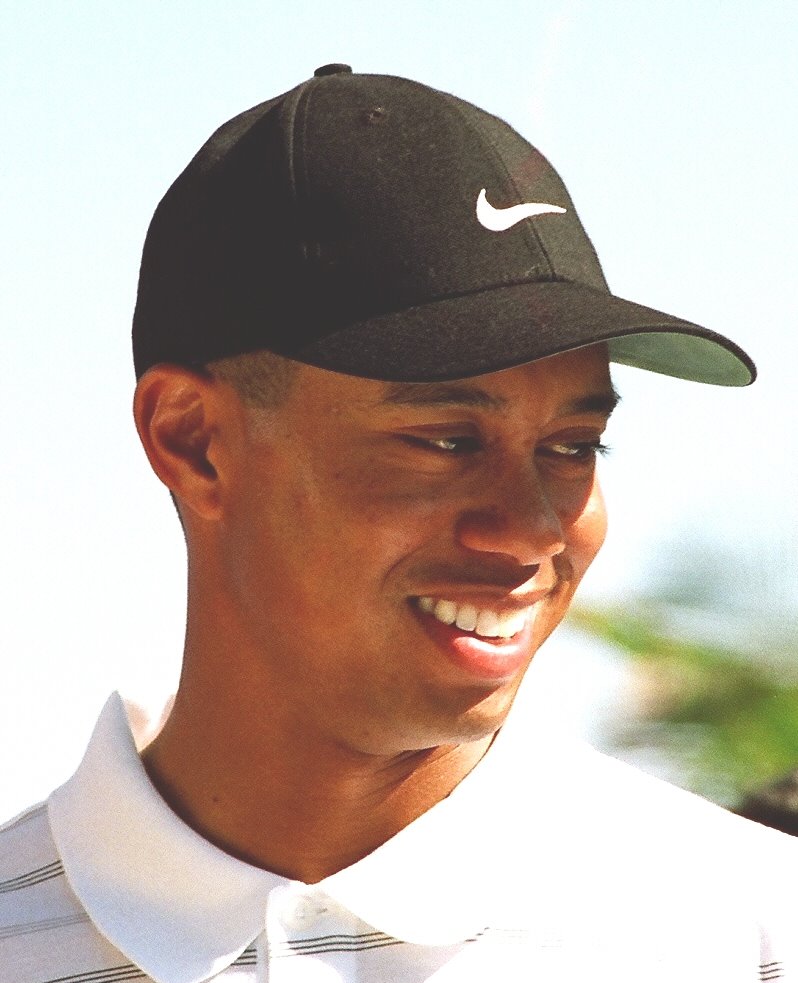
There was an awe-inspiring inevitability about Tiger Woods’s recent victory in the PGA, as there had been at his similar triumph in the previous Major at Royal Hoylake. In both wins we saw a “new, improved Tiger” – one who has now added the component of exceptional course management to his already peerless game. It seems that Tiger, working so effectively with his caddy Steve Williams, has worked out that if he plays to his strengths and manages his weaknesses then he will be almost unbeatable. Weaknesses? Well to start with Woods is one of the least accurate drivers on the PGA tour. His current record of hitting fairways with just under 60% of his drives puts him a lowly 152nd on the tour. Then there is his putting. The conventional wisdom is that to win golf tournaments you have to be a master on the greens. Well this year Tiger’s putting record is pretty average – his number of putts per hole record places him only 61st in the rankings. What about bunker play then, surely Woods is a master at getting down from the sand? No again, Tiger is only 44th in the list when it comes to “sand saves” – getting down in two or less from a trap.

So how can this inaccurate driver, who is only an average putter and struggles in the bunkers be having such a successful season? Well the sand play record gives us a clue. True, Woods is a long way from being the best bunker player – but he doesn’t get into them that often! His record this year is that he has only been in a bunker 54 times – slightly over once per round, a record that is close to being the best on the tour. The traps are placed to penalise wayward iron shots – on approach on a Par four or five and from the tee on the Par 3 holes. And it is with the approach irons that Tiger is unrivalled – the statistics indicate that Tiger is the most accurate player around on approaches to the green. And this is where his new found confident course management comes into play. At Hoylake Tiger rarely took a driver off the tee because he didn’t need to. He knew that to be well-positioned for the crucial shot to the green was all-important so he concentrated on position rather than length - and he did the same in the PGA. It is this astute and focused tactical play that has given Woods the best birdie record of all – he has more birdies on Par 4 and Par 5 holes this year than any other player.

Whilst the statistics of Tiger Woods 47 rounds of golf this year give some clear pointers as to the reasons for his success (six wins out of 13 events played) they only tell half the story. The real key to Tiger’s success comes from the fact that he is very hard to beat when he has victory in his sights – especially during the final round. His final round partners Sergio Garcia (at The Open Championship) and Luke Donald (at the PGA) found that their games wilted in the face of Tiger’s will to win. Garcia had a final round 73 to Woods’s 67 at Hoylake and Donald a 74 to Woods’s 68 at Medinah – they were both blown away!

The combination of technical excellence, unrivalled iron play, shrewd course management and still hungry ambition makes Tiger Woods the complete golfer and the consummate professional – especially in the tournaments that really matter. So what can we expect in the Ryder Cup next month – the only form of golf where Tiger has under-performed (he has won just 7 of his 20 Ryder Cup matches)? How can a man who destroys his rivals so completely in final day head to heads have such a modest record in Ryder Cup match play? My guess is that Tiger’s Ryder Cup record (whatever the reasons for it) is something that he will want to put right this year. Tiger, like all the greatest sportsman, hates to lose and he has been on a losing Ryder Cup team three times out of four. Whilst nothing in golf is certain I have a feeling that US Ryder Cup Captain Tom Lehman can bank on the maximum points from his leading player this year!

Tuesday, August 22, 2006

Paddy's Sports View 21st August 2006


For the "Bahrain Tribune"

The repercussions of Sunday’s extraordinary events at The Oval will be felt in cricket for a long time. Tribune sports columnist Paddy Briggs was at the ground – here is his special report.


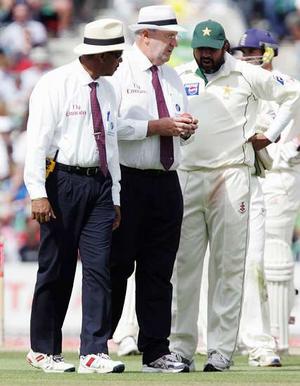
My seat at The Oval on Sunday was close to the off-field action as the extraordinary events unfolded - events which were to lead to the unprecedented forfeiture of the match by Pakistan. Whilst acres of newsprint will no doubt be covered around the cricket world in discussion of the controversy, and there will be differences of opinion as to who the heroes and villains were, to me the issue boils down to one cardinal principle. The Laws of Cricket state that “The umpires shall be the sole judges of fair and unfair play.” This is one of the shortest of all the laws and it is quite unequivocal. The preamble to the Laws adds that “The umpires are authorised to intervene in case of…tampering with the ball” and further that “It is against the Spirit of the Game…to dispute an umpire’s decision by word, action or gesture.” It is beyond argument, therefore, that the umpires at The Oval were within their rights in their actions in respect of what they saw as unfair play (ball tampering) and also that Pakistan was in serious contravention of the Laws (and their spirit) in the “protest” that they made.

At 4:40pm the umpires took the field after the rain break and the England batsmen were ready to resume, but the Pakistan side did not appear. Their dressing room door was closed, only to be opened from time to time to admit first their manager Zaheer Abbas and then their coach Bob Woolmer (neither of whom stayed in the room for very long). The umpires left the field and at that point there was a prima facie case that (as the Laws of cricket put it) there was “…action by any player or players [which] might constitute a refusal…to play”. The duty of the umpires in such circumstances is to “…ascertain the cause of the action [and] then decide together [if] this action does constitute a refusal to play” they then have to inform the captain and “if [he] persist in the action the umpires shall award the match [to the other team]”. So when at just before 5:00pm the umpires walked to the wicket again, this time accompanied by the two England batsmen, and for a second time (and despite the warning) the Pakistan team did not appear then the umpires were quite right to remove the bails, end the match and award it to England. And that should have been the end of the sorry matter.

The match was over at 5:00pm, the Laws and the spirit of the game had been upheld by the umpires and, sad though it all was, we should then all have gone home. But never underestimate the ability of cricket’s besuited officialdom to make bad situations immeasurably worse. Although the umpires had made their decision, and although it is undisputed that they have sole charge of the match, the Chairmen of the two cricket boards (David Morgan of the ECB and Shaharyar Khan of the PCB) took it upon themselves to get involved. I watched the two of them earnestly talking to one another outside the Pakistan dressing room and then each of them went in to talk to the Pakistan team. A little while later Shoaib Akhtar emerged and I asked him was what going on “They’re coming out” he said, and shortly afterwards out trooped Inzaman and his players (to a chorus of boos from the crowd).

The blatant and very public attempt by the two cricket Board chairman to undermine the decision that the umpires had made and try and get play restarted is perhaps the most shocking part of this whole sorry event. Remember these two men are not just the most senior cricket administrators in their respective countries, they are also both personally members of the International Cricket Council’s (ICC) executive board. To their great credit the umpires, Billy Doctrove and Darrell Hair, (both ICC employees, of course) refused to be intimidated and refused to be party to the squalid little deal that Morgan and Khan had brokered with the Pakistan team. It was the umpires’ entirely honourable decision not to stand in any restarted match which finally scuppered the match for good.

Passions are running very high at the moment and a period of calm would be welcome whilst the ICC looks closely at the whole affair (as they must). But it is important to state from the outset that, as in any sport, play can only happen if there is a framework of rules which delineate the limits of behaviour and which clearly decide who is in charge. The Laws of cricket certainly do this and these Laws are backed up by the ICC’s 8,700 word document “Standard Test Match Playing Conditions”. Reference to these Laws and conditions shows that the Pakistan team seriously contravened them in what they did (whether they had actually tampered with the ball or not) and that the umpires were wholly correct in their actions throughout. In this respect it is most regrettable that Shaharyar Khan should have made a disingenuous statement which defended the Pakistan team’s actions “We feel there is no evidence,” he said, “of deliberate scuffing of the ball. Once you accuse a team of deliberately tampering with the ball, it becomes a very big deal. We felt we should make a protest but we simply said that we would stay inside for a few minutes, and go out when the protest had been registered.” So a member of the Executive Board of the ICC is publicly endorsing an action by his players which has been in contravention of the Laws of the game and which has undoubtedly brought the game into disrepute! I wonder what his friends at the ICC will have to say about that. No very much, probably.

The root cause of Sunday’s Oval fiasco was a lack of proper leadership when it mattered most. Inzaman-Al-Haq should have said to his players “Look guys we are not happy about the ball-tampering allegations but the right time to progress this is after the match. Let’s get on and win it”. When he failed to do this Bob Woolmer or Zaheer Abbas or the ineffable Shaharyar Khan should have stepped in and said something similar. Instead there was vacillation and they all bowed to player power. Inzy has built a strong team with his distinctive brand of captaincy and it is quite clear that his players would do anything that he asked them. But it seems that in initiating the “protest” he put the rather arrogant conviction that he and his players had the moral high ground above common sense. And a match which could, and should, have ended with Pakistan (who played well throughout the game) gaining something from a series they had lost ends with them looking very foolish indeed.